

What if the tarnish on your favourite silver ring isn't a sign of neglect, but a quiet invitation to reconnect with the story it tells? Most of us feel a sudden pang of hesitation when a cherished, bespoke piece begins to lose its initial glow. You worry that using the wrong bottle from the cupboard might strip away the delicate, crinkled textures or the soft, intentional shadows that give your jewellery its soul. Learning how to clean handcrafted silver jewellery requires a departure from the aggressive scrubbing often applied to factory-made items; it's a slower, more mindful ritual of preservation.
We understand that your pieces are more than just metal. They're memories. This guide will show you how to gently restore that radiant lustre whilst honouring the unique character of your most meaningful items. We'll explore the secrets of preventative care, master techniques for textured surfaces, and look at the safest ways to keep your collection shining for years to come. By the end, you'll have the confidence to care for your silver with the same love and intention that went into its creation.
Key Takeaways
- Understand why high-purity sterling silver naturally reacts with the atmosphere and how to embrace this process as part of the metal’s life cycle.
- Master the gentle ritual of how to clean handcrafted silver jewellery using simple, phosphate-free tools that prioritise the preservation of the metal.
- Discover why manual polishing is the preferred method for protecting the soul of bespoke pieces compared to the risks of aggressive chemical dips.
- Learn specific techniques for navigating intricate textures, ensuring that silhouettes like the Crinkled and Struck collections remain free from trapped residue.
- Adopt the "Last On, First Off" rule to safeguard your favourite pieces from the dulling effects of perfumes, lotions, and everyday cosmetics.
Understanding Why Handcrafted Sterling Silver Tarnishes
There is a quiet, inevitable science behind the darkening of a silver ring or pendant. Often mistaken for a sign of poor quality, tarnish is actually a testament to the metal's authenticity. It occurs when silver is exposed to sulfur compounds in the air, resulting in a chemical reaction that forms a layer of silver sulfide on the surface. When you're researching how to clean handcrafted silver jewellery, it helps to view this process not as damage, but as a natural patina that develops over time. High-purity pieces, such as what is 925 sterling silver, are particularly susceptible to this change because of their composition and the way they interact with their environment.
The rate at which your jewellery loses its lustre can vary wildly from person to person. Factors like local humidity levels and even your unique skin pH play a significant role. Some individuals find their jewellery stays bright for months, whilst others notice a golden or grey hue within weeks. This superficial layer is easily managed and doesn't affect the structural integrity of the piece. Understanding the Conservation and restoration of silver objects reveals that this oxidation is a surface-level event, waiting to be gently cleared away to reveal the brilliance beneath.
The Role of Copper in Sterling Silver
To make silver durable enough for daily wear, artisans use an alloy of 92.5% pure silver and 7.5% other metals, typically copper. This specific ratio is what defines the sterling standard. While copper provides the necessary strength for intricate designs like a Halo Ring or Struck Collection piece, it's also the element that reacts most readily with moisture and oxygen. Oxidation acts as a protective but dulling layer that settles over the metal's surface.
Environmental Triggers Amongst Everyday Items
Our homes are filled with hidden catalysts that accelerate the tarnishing process. Common household items such as perfumes, hairsprays, and even certain sulfur-rich foods like eggs or onions can trigger a reaction. If you live near the coast, the salty sea air and high humidity will influence the behaviour of your silver, often causing it to darken more rapidly than in drier, inland climates. Interestingly, one of the best ways to keep tarnish at bay is simply to wear your jewellery often. The natural friction against your skin and clothing acts as a subtle, constant polish, preventing sulfur from settling. When you do eventually need to refresh a piece, knowing how to clean handcrafted silver jewellery with a soft touch ensures these environmental marks remain only a temporary part of its story.
The Gentle Art of Cleaning Artisan Silver at Home
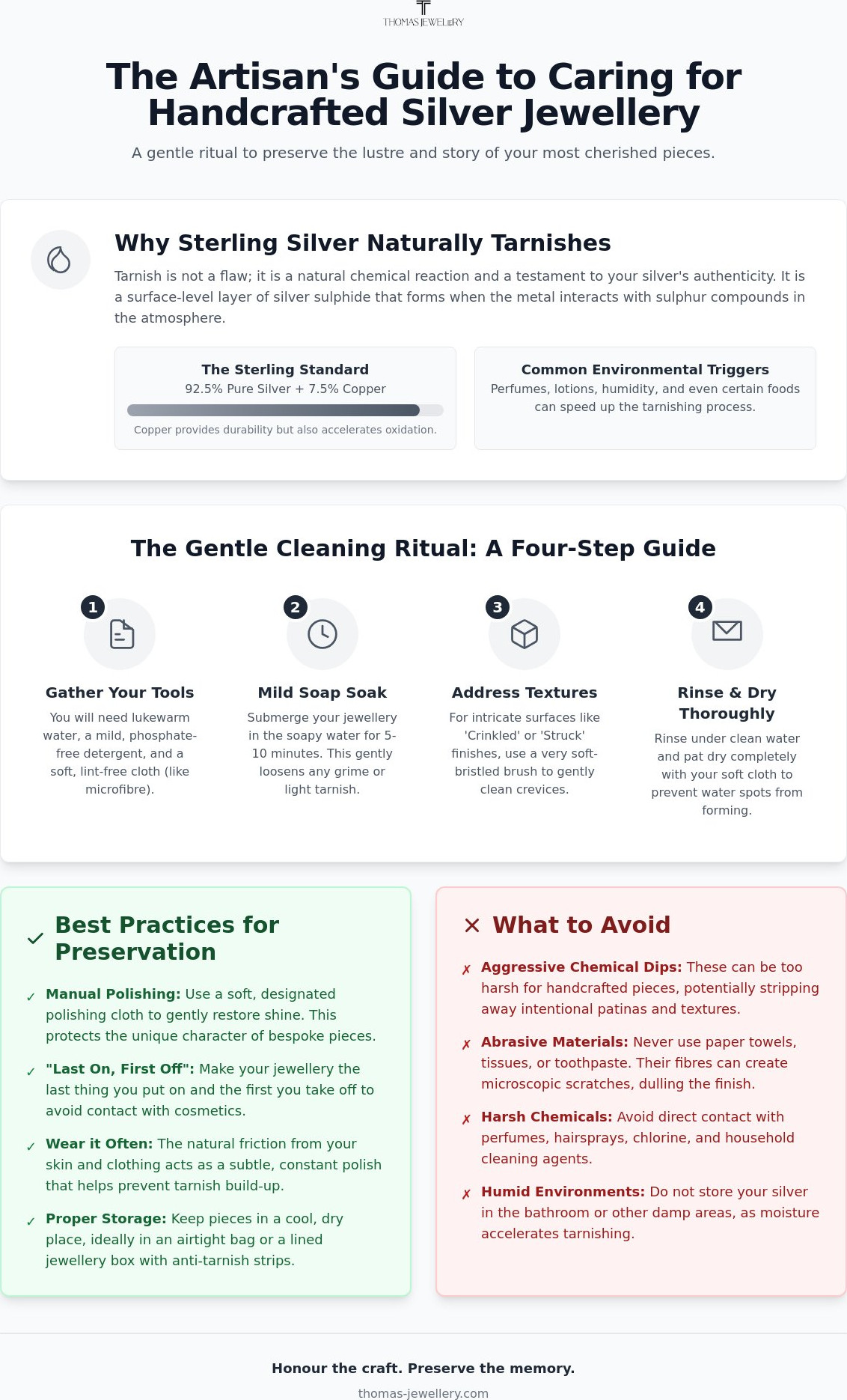
Caring for a bespoke piece of jewellery is a quiet act of stewardship. When you hold a piece that has been shaped by hand, you're holding a story, and the way you maintain it should reflect that same level of care. Adopting a "less is more" philosophy is essential. You aren't trying to strip the metal back to a clinical state; instead, you're gently inviting the light to return to the surface. Understanding The Gentle Art of Cleaning Artisan Silver at Home begins with choosing the right tools, most of which are already sitting in your cupboards. Before you begin, gather a small bowl of lukewarm water, a mild phosphate-free detergent, and a clean, lint-free cloth.
Avoid the temptation to reach for paper towels or kitchen tissues. While they might feel soft to the touch, they're often made from wood pulp fibres that can cause microscopic scratches on highly polished surfaces. Over time, these tiny abrasions dull the mirror-like finish of your favourite rings or earrings. A soft microfibre cloth or an old, well-washed cotton T-shirt is a far kinder choice for your collection. The final step of any cleaning ritual is the rinse and dry cycle. It's a simple stage, yet it's vital for preventing the unsightly water spots that can form when minerals in tap water are left to evaporate on the metal.
The Mild Soap Soak Method
Create a gentle cleaning bath by adding a few drops of detergent to your lukewarm water. For pieces with light tarnish, an immersion time of five to ten minutes is usually enough to loosen surface grime. If your jewellery features intricate design elements, like those found in the handcrafted collections at Thomas Jewellery, you might need a little extra help. Use a soft-bristled baby toothbrush to reach into the deeper recesses of the texture, moving in small, circular motions to lift away residue without applying heavy pressure.
Drying and Buffing for a Mirror Finish
Once you've rinsed your piece in fresh water, pat it dry with a soft cloth. Don't rub the metal while it's wet. Instead, ensure no moisture remains tucked away in crevices or behind settings. Once it's bone-dry, use a specialised silver polishing cloth to restore the high-shine lustre. The rhythmic motion of buffing should follow the natural lines of the jewellery, working in long, steady strokes rather than circular ones to maintain a consistent, professional glow. This mindful process ensures your how to clean handcrafted silver jewellery routine remains a restorative experience for both the object and the owner.
Navigating Home Remedies: What is Safe for Your Jewellery?
The allure of a quick home remedy is often hard to resist, especially when tarnish begins to cloud a favourite piece. You might have seen the popular "aluminium foil and baking soda" method shared across social media. While this chemical reaction effectively lifts silver sulfide, it can be surprisingly harsh on bespoke items. It often leaves the metal with a dull, chalky appearance rather than a warm, artisanal glow. When considering how to clean handcrafted silver jewellery, it's vital to remember that mass-market solutions don't always respect the subtle nuances of hand-finished work.
Chemical dips represent another common shortcut. These liquids are highly acidic and work by eating away the top layer of the metal. For an artisan piece with intentional shadows or oxidised details, a dip can be disastrous, stripping away the very character that makes the jewellery unique. Instead, independent silversmiths almost always recommend manual polishing. It allows for a level of control that machines and chemicals simply cannot match. Even Martha Stewart's guide to cleaning silver acknowledges the balance between effective cleaning and the preservation of a piece's history.
The Risks of Abrasive Pastes
Many "old-wives" remedies, such as using toothpaste or thick baking soda pastes, are far too abrasive for contemporary jewellery. These grainy mixtures act like liquid sandpaper. Over time, they create a network of tiny scratches that permanently dull a high-polish finish. For pieces with complex textures, these pastes are even more problematic as they tend to get trapped in the grain of the metal. Always test any new cleaning method on a small, hidden area of your jewellery before proceeding with the entire piece.
When to Choose a Professional Silver Cloth
A professional silver polishing cloth is perhaps the most valuable tool in your care kit. These cloths are impregnated with specialised anti-tarnish agents that do more than just clean; they provide a microscopic layer of protection against future oxidation. When using one, avoid the urge to scrub. Use light, steady pressure to buff the surface, being careful not to over-polish and lose the unique, handcrafted character of the metal. Remember that these cloths should never be washed. Doing so removes the essential cleaning chemicals, rendering the cloth little more than a standard rag. Using a dedicated cloth ensures your how to clean handcrafted silver jewellery routine remains both safe and effective.
Caring for Unique Textures: Crinkled, Struck, and Bubble Finishes
Handcrafted silver is rarely just a flat plane. It’s a landscape of peaks and valleys. When you own a piece from the Crinkled or Struck collections, you’re carrying a miniature sculpture defined by its intentional irregularities. These undulating surfaces catch the light beautifully, but they also provide sanctuary for tarnish to settle in the deeper recesses. Learning how to clean handcrafted silver jewellery with complex textures requires a shift in perspective. You aren’t just polishing a surface; you’re maintaining a three-dimensional work of art.
One of the most common mistakes is using thick, store-bought cleaning pastes or DIY baking soda mixtures on these tactile designs. These substances are notoriously difficult to rinse away. In the "Bubbles of Chapel Down" silhouettes, for example, the tiny spherical details can easily trap dried residue, leaving a white, chalky film that dulls the metal’s natural glow. Instead of heavy pastes, rely on the gentle soak method discussed earlier. If dust or lint becomes trapped in the tighter crevices of your rings, a quick puff of compressed air or a very soft, dry makeup brush can clear the debris without the need for moisture.
Deep Cleaning Sculptural Silhouettes
Contemporary sterling silver Cocktail Rings and nature-inspired pendants often feature bold, irregular shapes that require a thorough rinse. When cleaning these sculptural items, pay close attention to the "crinkles" and folds. If any soap or detergent remains trapped against the skin, it can cause minor irritation or leave the metal looking cloudy. After soaking, hold the piece under a steady stream of lukewarm water, turning it to ensure every hidden angle is flushed clean. This ensures the lustre remains consistent across the entire silhouette.
Maintaining the Contrast of Hammered Finishes
The allure of the Struck Collection lies in the contrast between its reflective peaks and the softer, shadowed valleys. Over-polishing with a heavy hand can flatten these intentional textures, particularly on smaller items like Crinkled Cufflinks. To preserve the artisan's mark, use your polishing cloth lightly on the raised areas only. There is a quiet beauty in the natural patina that settles into the depths of a textured piece, providing a rich contrast that highlights the hammer marks and the heat of the forge. By focusing your efforts on the high points, you maintain the visual depth that makes handcrafted work so distinctive. Discover the tactile elegance of our latest handcrafted collections and find a piece that speaks to your own sense of style.
Preserving the Lustre: Long-term Care and Storage
While mastering the ritual of how to clean handcrafted silver jewellery is an essential skill, the ultimate act of stewardship is prevention. It is a transition from restorative work to a steady, protective rhythm. By adopting a few mindful habits, you can significantly extend the time between deep cleans and ensure your pieces remain as luminous as the day they left the workshop. Caring for your collection is not a chore; it’s a way of honouring the craftsmanship and the stories woven into the metal.
One of the most effective habits you can form is the "Last On, First Off" rule. Perfumes, lotions, and hairsprays contain chemicals that accelerate oxidation and can leave a stubborn film on silver. By making your jewellery the very last thing you put on in the morning and the first thing you remove in the evening, you minimise its exposure to these environmental stressors. Furthermore, always ensure your jewellery is stored individually. When pieces are allowed to jumble together in a tray, they can easily scratch one another, particularly amongst designs with different hardness levels or delicate textures. For a more detailed exploration of these techniques, see our comprehensive guide on how to store silver jewellery to prevent tarnish.
The Ideal Storage Environment
Silver thrives in environments that are cool, dry, and dark. Exposure to direct sunlight or humid bathroom air can cause tarnish to bloom rapidly. To combat moisture, consider placing a small silica gel packet or a specialised anti-tarnish strip inside your jewellery box. These simple tools absorb the sulfur and moisture that lead to darkening. A velvet-lined box serves as the perfect centre for organised storage, providing a soft, non-reactive surface that protects the metal from both the atmosphere and physical impact.
The Ritual of Daily Care
A quick, daily wipe-down is a powerful preventative measure. After wearing your silver, use a soft lint-free cloth to gently remove any trace of skin oils or sweat before returning the piece to its box. This moment also provides a wonderful opportunity to check the integrity of your jewellery. Whilst you are wiping the metal, take a second to inspect clasps, earring backs, and settings to ensure everything remains secure and functional. This small, intentional act of maintenance ensures that your favourite pieces are always ready for their next outing. Proper care transforms the way we interact with our belongings, making every ordinary day feel just a little more extraordinary. Knowing how to clean handcrafted silver jewellery is only half the journey; the rest is found in the quiet, daily respect we show to the objects we love.
Embracing the Lasting Brilliance of Artisan Silver
Your journey with a bespoke piece is a continuous story of light and shadow. By understanding that tarnish is merely a natural pause in your jewellery's lustre, you can move away from worry and toward a more intentional form of care. We have explored how a gentle soak and the mindful use of a polishing cloth are far superior to aggressive chemical dips, especially when preserving the unique "valleys" of textured designs. Mastering how to clean handcrafted silver jewellery ensures that the artisan's touch remains visible for a lifetime; it transforms maintenance into a quiet, rewarding ritual of preservation.
If you're looking to add a new narrative to your collection, we invite you to explore our collections of handcrafted silver jewellery. Each piece is meticulously handcrafted in the UK, blending Red Dot-inspired contemporary design with the warmth of traditional techniques. With artisan quality guaranteed and secure UK delivery, these are pieces designed to elevate your everyday moments.
Let your jewellery be a reflection of the care you give it. With these simple practices, your favourite silver silhouettes will continue to glow with an enduring, soulful brilliance.
Frequently Asked Questions
Is it safe to clean my handcrafted silver jewellery with toothpaste?
No, you should avoid using toothpaste on your bespoke silver pieces. While it is a common home remedy, toothpaste contains abrasive particles like silica that can cause microscopic scratches on the surface. These tiny abrasions permanently dull a high-polish finish over time. When you are learning how to clean handcrafted silver jewellery, it is much safer to use a mild, phosphate-free detergent and a soft cloth to protect the metal's integrity.
How often should I clean my sterling silver pieces?
You should clean your jewellery whenever you notice the first signs of a golden or greyish hue. There is no set schedule for maintenance because the rate of tarnish depends on your skin chemistry and environment. Some people find their rings need attention once a month, whilst others go much longer. A quick wipe with a soft cloth after each wear is the best way to reduce the frequency of deep cleaning.
Can I wear my silver rings whilst showering or swimming?
It is best to remove your silver rings before you step into the shower or a swimming pool. Chlorine in pools and sulfur often found in tap water accelerate the tarnishing process significantly. Additionally, soaps and shampoos can leave a stubborn film in the intricate textures of pieces like the Halo Ring, making the metal appear dull and lacklustre rather than radiant and bright.
Why is my silver jewellery turning black so quickly?
Rapid tarnishing is usually the result of environmental triggers or your unique skin pH. Proximity to the coast or high-pollution urban areas increases the amount of sulfur in the air, which reacts with the silver. Even certain medications or sulfur-rich diets can change your skin chemistry. Interestingly, wearing your jewellery daily can help, as the natural friction against your skin prevents tarnish from settling on the surface.
Is it safe to use an ultrasonic cleaner for handcrafted silver?
We generally advise against using ultrasonic cleaners for handcrafted items. The intense vibrations can loosen stones in their settings or even damage delicate, hand-finished textures over time. While these machines are common in mass-market retail, they lack the gentle, intentional touch required for artisanal work. Manual cleaning remains the most reliable method for preserving the character and soul of your favourite contemporary designs.
How do I clean silver jewellery that features gemstones or pearls?
Jewellery featuring pearls or porous gemstones requires a very cautious, targeted approach. Never submerge pearls or soft stones like turquoise in cleaning solutions, as they can be permanently damaged by moisture and chemicals. Instead, use a damp, soft cloth to wipe the silver elements only. Avoid getting any soap or water near the settings to ensure the stones remain secure and their natural lustre stays intact.
What is the best way to remove heavy tarnish from an old silver pendant?
The best way to remove heavy tarnish is through repeated, gentle cleanings rather than one aggressive treatment. Start with a lukewarm soap soak to loosen the thickest layer of silver sulfide. Once the piece is bone-dry, use a professional silver polishing cloth to buff the surface back to a shine. This methodical approach is the most effective way how to clean handcrafted silver jewellery that has been stored away for years.
Can I use baking soda and vinegar to clean my silver jewellery?
Avoid using baking soda and vinegar, as this chemical reaction can be far too harsh for high-purity silver. This method often strips away intentional oxidisation and can leave the metal with an unnaturally white, chalky appearance. To maintain the sophisticated refinement of your collection, stick to pH-neutral detergents and soft microfibre cloths. These tools ensure your jewellery remains beautiful without the risk of pitting or surface damage.