

You are dressed and ready for a long-awaited evening, reaching for your favourite crinkled cufflinks or a delicate halo ring, only to find the silver has dimmed into a dull, grey shadow of its former self. It is a small but sharp disappointment to discover that a cherished piece has tarnished just when you need its evocative lustre the most. Learning how to store silver jewellery to prevent tarnish is not merely about maintenance; it is an act of curation that honours the craftsman’s work by pausing the natural chemical reaction between metal and air.
We know the confusion that comes with choosing the right storage, especially when you fear damaging the intricate textures of a struck finish or a delicate butterfly pendant. You deserve to feel confident that your collection is resting safely, preserved in its as-new state. In this guide, we will share the definitive rituals for protecting your silver treasures, from the technical necessity of replacing anti-tarnish strips every six to twelve months to finding aesthetic solutions that match the beauty of the jewellery itself. We will move from the simple science of sulfur to the quiet, daily habits that keep your silver evocative and bright for a lifetime.
Key Takeaways
- Understand the natural alchemy of tarnish to better master how to store silver jewellery to prevent tarnish and maintain its original brilliance.
- Create a dedicated sanctuary for your collection by following the "cool, dark, and dry" rule to slow down unavoidable chemical dialogues with the air.
- Learn why individual compartments are vital for preventing both physical scratches and the subtle galvanic reactions that occur when different metals touch.
- Master the pre-storage ritual of removing oils and residues, ensuring your silver rests in a pristine state after every wear.
- Discover how investing in thoughtful artisan craftsmanship and unique textures can simplify your preservation routine for years to come.
Why Does Sterling Silver Tarnish? Understanding the Alchemy
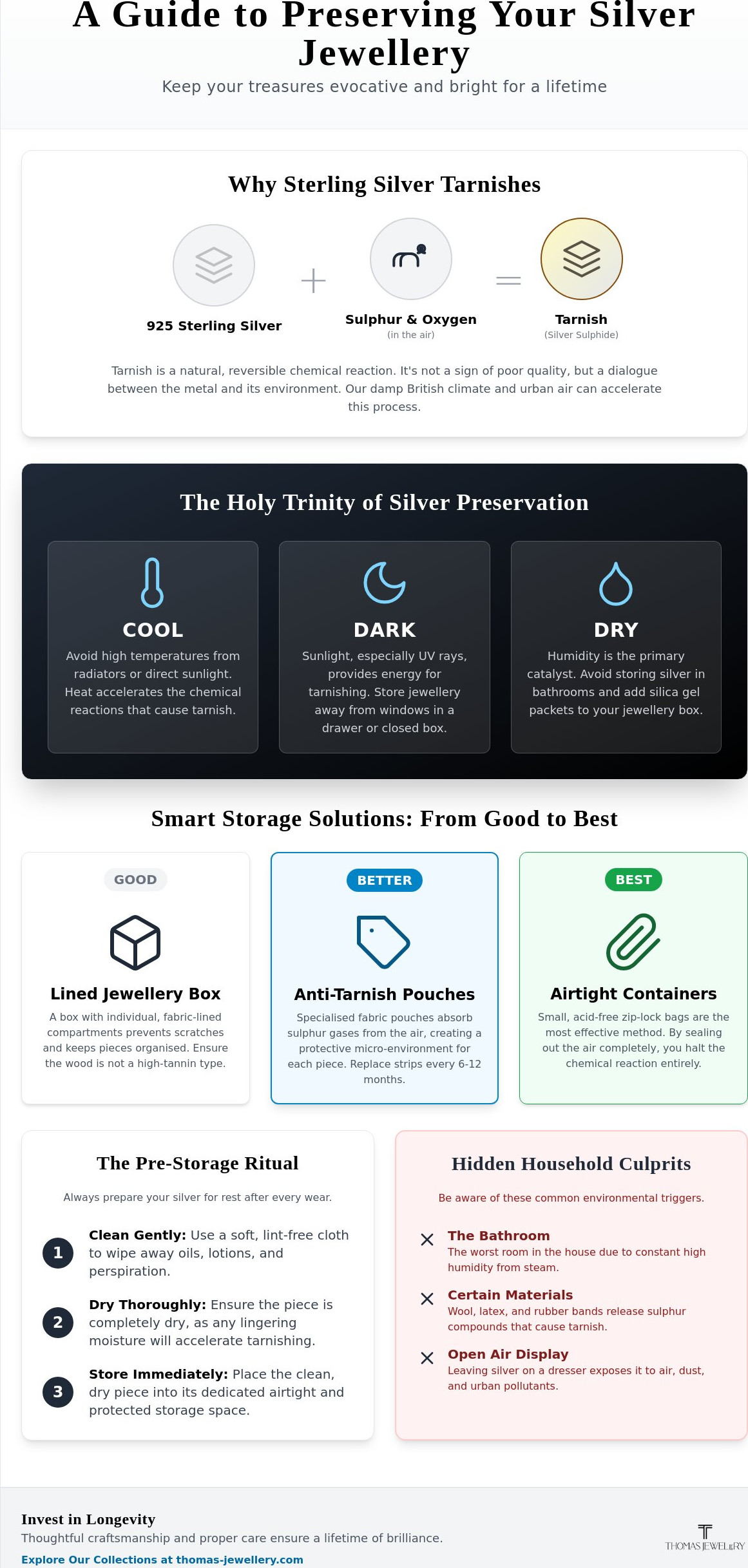
Tarnish is often misunderstood as a sign of neglect or poor quality. In reality, it is a natural, reversible chemical reaction that occurs on the surface of the metal when it meets its environment. To understand Why Does Sterling Silver Tarnish? is to appreciate the metal's sensitive nature. It isn't "rotting" or "rusting" like iron; it is simply forming a thin layer of silver sulphide as it interacts with hydrogen sulphide in the air. This dulling of the light is quite different from the intentional, deep-set patina used in artisan designs to highlight textures, such as the evocative depths found in a halo ring or pieces from the Struck Collection. Understanding this process is the first step in mastering how to store silver jewellery to prevent tarnish.
Here in Britain, our damp climate plays a silent role. Humidity acts as a catalyst, accelerating the chemical dialogue between your jewellery and the atmosphere. If you live in an urban centre, the legacy of industrial air pollution and modern traffic emissions can introduce higher levels of sulphur compounds into your home. This makes knowing how to store silver jewellery to prevent tarnish particularly vital for those living in busy cities or coastal areas where the air is heavy with moisture. It is an environmental reality that requires a thoughtful, protective ritual.
The Role of Sulphur and Oxygen
When silver meets sulphur, the resulting silver sulphide creates that characteristic golden, then brown, and finally black film. Whilst pure 999 silver is more resistant to this change, it is far too soft for the intricate details of crinkled cufflinks or a delicate butterfly pendant. This is why we use 925 sterling silver, which is alloyed with 7.5% copper to provide the necessary strength for daily wear. Sterling silver requires copper for its enduring durability, yet it is this very addition that increases the metal's susceptibility to tarnishing.
Environmental Triggers in the Home
Your home is full of hidden sulphur sources that can steal the lustre from your treasures. Woollen jumpers in a wardrobe, latex gloves in a kitchen, and even the tannins in certain wooden jewellery boxes can trigger a reaction. Many people mistakenly keep their favourite pieces in the bathroom for convenience, but this is the least favourable room in the house. The constant cycle of steam and lingering dampness creates a hothouse for tarnish, making it nearly impossible to keep silver bright without a proper storage ritual. Urban pollution further complicates this, as microscopic particles settle on exposed surfaces, initiating the tarnishing process much faster than in rural environments.
What is the Best Environment for Storing Silver Jewellery?
Creating a sanctuary for your silver begins with a commitment to the environment in which it rests. To truly master how to store silver jewellery to prevent tarnish, one must follow the "Cool, Dark, and Dry" rule, often called the holy trinity of silver preservation. High temperatures and direct sunlight act as invisible catalysts. UV exposure and heat don't just warm the metal; they provide the energy needed for sulphur to bond more aggressively with the silver surface. A drawer in a bedroom, away from the fluctuating heat of a radiator or the glare of a south-facing window, provides the stable, temperate climate your collection requires.
Low-humidity environments are essential because moisture carries the atmospheric gases that cause discolouration. Whilst we can't change the British weather, we can control the micro-climate inside a jewellery box. By reducing the presence of water vapour, you effectively slow down the chemical dialogue that leads to a dull finish. This protective ritual ensures that when you reach for a favourite piece, like a shimmering Halo Ring, it greets you with its intended brilliance.
Airtight Solutions and Micro-Environments
Excluding oxygen and moisture is the most effective way to pause time for your silver. Specialised jewellery pouches lined with anti-tarnish fabric offer a soft, protective embrace for delicate items. For a more practical approach, small, acid-free zip-lock bags are incredibly effective at sealing out the air. It might feel less romantic than a velvet-lined box, but the lack of oxygen prevents the chemical reaction entirely. Using these airtight methods is a cornerstone of how to store silver jewellery to prevent tarnish, especially for pieces with intricate textures. Within your larger storage chest, adding silica gel packets will help absorb any lingering moisture, creating a dry haven for your treasures.
Anti-Tarnish Strips and Advanced Protection
Introducing "sacrificial" materials into your storage is a professional secret for long-term care. Anti-tarnish strips, often made with activated charcoal or silver-absorbent technology, work by neutralising atmospheric gases before they can reach your jewellery. These strips act as a shield, drawing the sulphur away from your silver. Verified research suggests these strips should be replaced every 6 to 12 months to remain effective. Such attention to detail ensures that handcrafted silver jewellery UK collectors cherish remains as evocative as the day it was forged.
How to Organise and Separate Different Jewellery Types
A common mistake is to treat a jewellery box as a catch-all container, allowing pieces to rest in a tangled heap. Whilst it may seem convenient, this lack of structure is the primary cause of physical scratches and surface dullness. Silver is a relatively soft metal, and the friction of one piece rubbing against another can quickly erode the fine details of an artisan finish. Beyond the physical damage, a crowded storage space makes it difficult to see the beauty of your collection, turning the simple act of choosing an accessory into a moment of frustration.
When different metals like gold, silver, and brass are allowed to touch, a subtle process called galvanic reaction can occur. This interaction often accelerates tarnish on the silver, acting as a quiet catalyst for discolouration. Gold is more chemically stable than silver; when they remain in contact, the silver can effectively "sacrifice" its electrons, leading to faster oxidation. Understanding how to store silver jewellery to prevent tarnish requires a physical separation of elements to ensure each metal remains in its pristine state.
Individual compartments are the most effective way to maintain the integrity of each piece. By giving every ring, pendant, and cufflink its own sanctuary, you eliminate the risk of micro-scratches that dull the metal’s evocative lustre over time. Using padded dividers or small, fabric-lined trays provides a soft resting place that respects the weight and shape of the work. Organising your collection by style or occasion also transforms the daily ritual of dressing into a more effortless, contemplative experience.
Storing Sculptural Rings and Pendants
The clean, circular geometry of the Halo Ring demands a dedicated slot to preserve its contemporary silhouette. For more intricate, sculptural pieces like the Bubbles of Chapel Down collection, individual storage is vital to avoid dust settling in deep crevices. Padded ring slots or soft-lined dividers prevent the metal from rubbing against hard surfaces, ensuring that the interplay of light and texture remains as striking as the day the piece was first struck. This level of care is a fundamental part of how to store silver jewellery to prevent tarnish whilst protecting its form.
Preserving Men’s Silver Accessories
Men's silver accessories, particularly artisan silver cufflinks for men, require specific attention to prevent post-to-cuff tarnish. Whilst it is tempting to keep pairs together in a small bowl, they should be stored in a way that prevents them from clashing. Felt-lined boxes are particularly beneficial for heavier, struck-silver pieces from the Struck Collection. These soft linings cushion the metal, providing a stable resting place that respects the artisanal weight and texture of the work. Keeping pairs organised together but physically separated ensures they are ready for immediate wear without the need for last-minute polishing.
The Pre-Storage Ritual: Preparing Silver for Rest
As the day draws to a close, the way you retire your jewellery is just as significant as the way you chose it. Tarnish rarely begins in the air alone; more often, it starts with the invisible traces we leave behind. Skin oils, traces of hand cream, and the fine mist of perfume all settle into the metal’s grain, creating a film that reacts with the atmosphere once the piece is tucked away. Mastering how to store silver jewellery to prevent tarnish requires a mindful transition from the skin to the box, ensuring the metal is as clean as possible before it begins its rest.
The "Last On, First Off" rule is a simple but effective ritual. By making your jewellery the final touch of your morning routine and the first thing you remove in the evening, you minimise its exposure to domestic chemicals. A quick wipe with a soft cloth takes barely ten seconds, yet it is perhaps the most important moment of your evening. This isn't a deep clean or a vigorous polish; it is a gentle clearing of the day’s journey, removing the residues that would otherwise spend the night reacting with the silver. By prioritising this ten-second habit, you significantly reduce the frequency with which you'll need to reach for more abrasive cleaning agents, preserving the delicate struck or crinkled finishes of your most cherished pieces.
Removing Chemical Residues
Using a lint-free microfibre cloth, gently buff the surface to lift away fingerprints and oils. It is vital to never store silver whilst it remains damp from skin contact or cleaning, as trapped moisture inside an airtight container will only accelerate the tarnishing process. Ensure your favourite scent has completely evaporated on the skin before donning your jewellery, as the alcohol and chemicals within perfumes are aggressive catalysts for surface dullness. This simple pause in your routine is an essential step in how to store silver jewellery to prevent tarnish.
Inspecting for Early Signs of Tarnish
Before placing your pieces in their dedicated compartments, take a moment to look for a subtle yellowing. This golden hue is the first whisper of silver sulphide, appearing long before the metal turns noticeably black. Catching these early signs makes restoration a simple task rather than a chore. This is especially important for nature inspired silver jewellery, where the intricate botanical details and organic textures can easily hide the first signs of dullness in their crevices. A mindful inspection ensures that the delicate interplay of light and texture remains crisp and clear.
Discover our collection of nature inspired silver jewellery and find a piece that speaks to your own sense of story and style.
Investing in Longevity: Why Quality Matters for Storage
The relationship between an artisan piece and its owner is one built on a shared appreciation for enduring beauty. Whilst the environment and rituals we have discussed are vital, the quality of the jewellery itself plays a significant role in how it ages. High-quality artisan craftsmanship often results in smoother, more refined finishes at a microscopic level. These superior finishes leave fewer "pockets" where atmospheric sulphur can settle and begin the tarnishing process. Understanding how to store silver jewellery to prevent tarnish is far simpler when the metal itself is of a superior standard, as the reaction remains predictable and surface-level.
Our focus on distinctive textures, such as the Crinkled and Struck collections, is purposefully designed for a lifetime of wear. These finishes don't just capture the light in unique ways; they are robust and resilient. Hallmarked sterling silver provides a guarantee of purity, ensuring that the metal behaves exactly as expected over the decades. When you invest in a piece with a verified 925 composition, you are choosing a metal that responds beautifully to care, allowing you to maintain its evocative lustre with minimal effort. There is a deep emotional reward in opening a well-organised jewellery box to find each piece as bright and ready as the day it was first worn.
The Thomas Jewellery Philosophy of Care
We believe in designing with the "future patina" in mind. Silver is a living metal, and as it ages, it develops a character that is unique to your own journey. By following a thoughtful storage ritual, you aren't just fighting a chemical reaction; you are honouring the story of the handcrafted work. Our role as artisans extends beyond the forge; we are here to provide the guidance you need to care for the specific textures of each collection. We invite you to view the act of storing your jewellery as a quiet moment of reflection, a way to respect the inspiration and the hours of careful work that went into every curve and strike.
Building a Sustainable Jewellery Wardrobe
In a world of disposable fashion, choosing to buy fewer, better-quality pieces is a powerful act of sustainability. A curated collection of sterling silver treasures is far easier to maintain than a vast heap of plated items that inevitably lose their finish. The long-term value of sterling silver lies in its ability to be restored and passed down through generations, a quality that "fashion" jewellery simply cannot match. By investing in artisan pieces, you simplify your maintenance ritual, ensuring that your daily dressing remains a joy rather than a chore. Your collection becomes a gallery of memories, preserved through the simple, effective methods we have explored.
Explore our handcrafted silver collections and start your own story today, and find a piece that will remain a luminous part of your life for years to come.
Preserving Your Silver Legacy
Mastering the art of preservation turns a simple chore into a meaningful ritual that honours your collection's story. By embracing the "cool, dark, and dry" trinity and dedicating ten seconds each evening to a gentle pre-storage wipe, you ensure your treasures remain as luminous as the day they left the forge. Understanding exactly how to store silver jewellery to prevent tarnish is the final piece of the puzzle in building a sustainable, lifelong wardrobe of wearable art. When you choose pieces crafted with intention, maintaining their evocative lustre becomes a joy rather than a burden.
Our contemporary artisan designs are handcrafted in the UK, created for those who find beauty in the subtle interplay of light and texture. These simple habits protect the intricate details of every struck finish and crinkled surface, ensuring they age with grace. Discover the evocative textures of our Handcrafted Silver Collections and enjoy peace of mind with secure payment options via Apple Pay and PayPal. Your silver is a reflection of your own journey; let it shine brightly for years to come.
Frequently Asked Questions
Can I store my silver jewellery in a wooden box?
Storing silver in an unlined wooden box is generally unwise because certain woods, particularly oak, release acidic vapours and tannins that accelerate the tarnishing process. If you favour the aesthetic of wood, ensure the box is lined with acid-free fabric or felt. This barrier prevents the metal from reacting with the wood’s natural oils and gases, preserving the evocative lustre of your collection.
How often should I change the anti-tarnish strips in my jewellery box?
You should replace anti-tarnish strips every six to twelve months to ensure they continue to absorb atmospheric sulphur effectively. These strips act as a sacrificial shield, but their capacity to neutralise gases is finite. Marking your calendar for a bi-annual refresh is a simple way to maintain a protective environment, especially when learning how to store silver jewellery to prevent tarnish over long periods.
Is it safe to store silver in plastic bags?
It is safe to use plastic bags as long as they are PVC-free, such as polyethylene zip-lock bags. Traditional PVC contains plasticisers that release corrosive gases over time, which will damage the silver’s surface. Using small, airtight bags is a practical method for excluding oxygen and moisture, keeping individual pieces like a halo ring or butterfly pendant in a pristine, static environment.
Why does my silver jewellery tarnish even when I don’t wear it?
Silver tarnishes even when resting because it is in a constant chemical dialogue with hydrogen sulphide found naturally in the air. This reaction occurs regardless of whether the piece is on your skin. Humidity acts as a catalyst for this process; this is why a cool, dry sanctuary is essential for preserving the as-new look of your artisan silver whilst it is not in use.
Can I store silver and gold jewellery together in the same compartment?
You should avoid storing silver and gold together in the same compartment to prevent a process known as galvanic reaction. When these different metals touch, the silver can oxidise more rapidly, leading to premature dullness. Gold is also a harder metal; it can easily leave micro-scratches on the softer surface of your silver jewellery, compromising its delicate artisan textures and smooth finishes.
Should I use chalk to prevent tarnish in my jewellery box?
Placing a piece of white chalk in your jewellery box is a traditional and effective way to absorb excess moisture from the air. Since humidity is a primary driver of the tarnishing process, keeping the environment dry is vital. Whilst specialised silica packets are a more modern alternative, a simple piece of chalk remains a humble, accessible tool for anyone mastering how to store silver jewellery to prevent tarnish.
Does wearing silver jewellery actually help prevent tarnish?
Wearing your silver jewellery frequently can actually help prevent tarnish because the natural friction against your skin and clothing gently buffs away early oxidation. The oils from your skin can also provide a very fine protective barrier against the atmosphere. However, this only applies to clean skin. Always remove your pieces before applying lotions or perfumes, as these chemicals will have the opposite effect.
What is the best type of cloth to use for wiping silver before storage?
The best type of cloth for a pre-storage ritual is a soft, lint-free microfibre cloth or a specialised silver polishing cloth. Avoid using paper towels or tissues, as these contain abrasive wood fibres that can leave tiny scratches on the metal. A gentle buff with a clean microfibre cloth removes the day's traces of oils and residues, ensuring your silver rests in a pristine state.