

You reach into your jewellery box for a favourite piece, perhaps a textured ring from the Struck collection, only to find its silver surface has clouded over with a dull, greyish veil. It’s a quiet moment of heartbreak that many of us know well, often followed by a search for how to prevent silver jewellery from tarnishing without damaging the intricate metalwork. You might feel a flicker of worry, unsure if a harsh chemical will strip away the delicate finish or if conflicting advice will cause more harm than good. We understand that these handcrafted objects are more than just accessories; they are vessels for memories and small celebrations of the everyday.
Keeping that original lustre doesn't have to be a source of stress. This guide offers a thoughtful approach to preservation, blending artisanal secrets with simple, mindful rituals. By understanding the natural science behind oxidation and adopting a few protective habits, you can ensure your treasures remain as radiant as the day they were created. We'll explore everything from proper storage to the gentle art of maintenance, giving you the confidence to care for your collection with ease.
Key Takeaways
- Understand the natural science of oxidation and why the copper within your sterling silver is the key to both its strength and its eventual tarnish.
- Master the "last on, first off" ritual and discover how to prevent silver jewellery from tarnishing by simply making your favourite pieces a part of your daily attire.
- Identify the hidden environmental culprits in your home and learn how to create a protective, air-tight sanctuary for your collection.
- Explore the gentle restoration techniques required to safely polish contemporary textures, such as the Crinkled or Struck finishes, without losing their intentional character.
- Learn the professional secrets to maintaining the luminous lustre of sculptural designs whilst avoiding the damage caused by harsh, abrasive chemicals.
Why Sterling Silver Tarnishes: The Science of the Shimmer
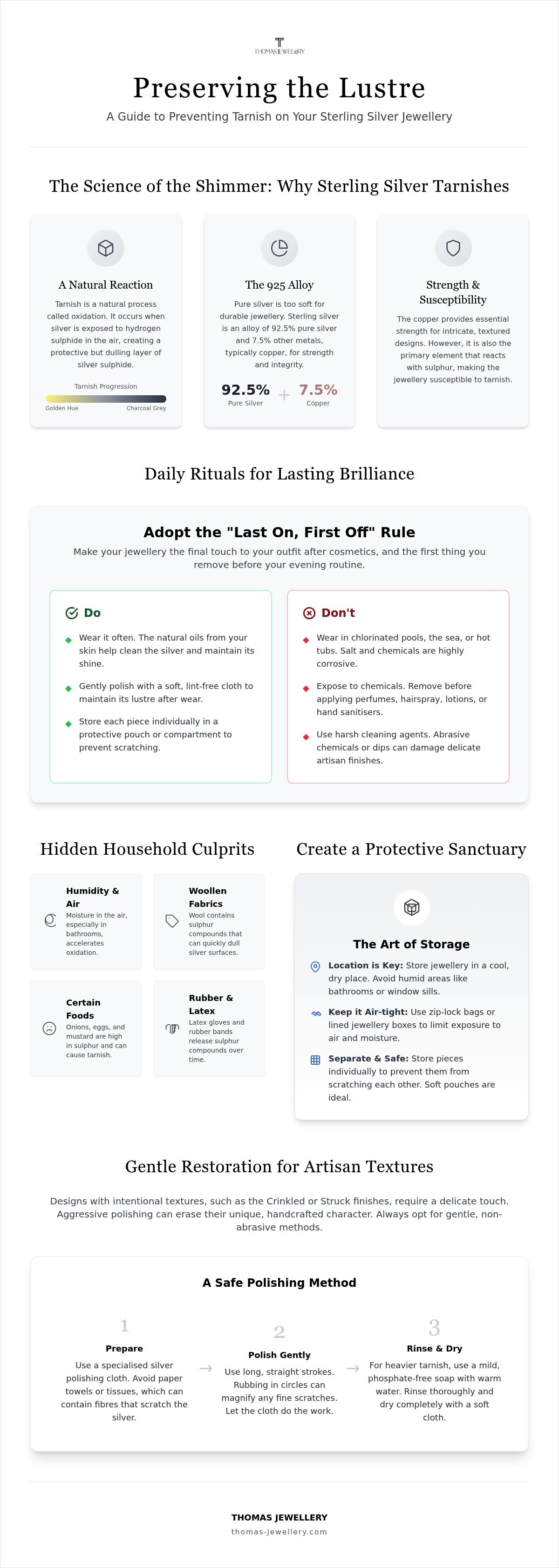
There is a quiet, inevitable chemistry that occurs when silver meets the world. While we often think of tarnish as a sign of neglect, it's actually a natural chemical reaction known as oxidation. When your silver pieces are exposed to the atmosphere, they begin a subtle transformation. This shift starts with a soft, warm golden hue, eventually deepening into a moody, charcoal grey. Understanding the science of silver tarnish is the first step in learning how to prevent silver jewellery from tarnishing, as it allows us to see our jewellery as living objects that respond to their environment.
The primary catalyst for this change is hydrogen sulphide, a trace gas found naturally in the air around us. When this gas touches the surface of the metal, it creates a bond that alters the silver's appearance. It's a reminder that even the most enduring treasures are part of a delicate, constant dialogue with the elements. This reaction isn't a sign of poor quality; rather, it's a hallmark of the metal's authenticity.
The Role of Copper in Sterling Silver
In its purest form, silver is remarkably soft, almost like wax. Whilst beautiful, pure silver lacks the resilience needed for the sculptural forms of contemporary jewellery. To create the bold, architectural shapes found in our Cocktail Rings, we use 925 sterling silver. This globally recognised alloy consists of 92.5% pure silver and 7.5% copper. This specific ratio ensures the metal remains precious whilst gaining the structural integrity required for daily wear.
This small addition of copper provides the essential strength required for our signature Crinkled and Struck textures. Without it, the fine details and crisp edges of these designs would simply warp or flatten over time. However, copper is also the element that reacts most aggressively with sulphur. This means the very ingredient that gives your jewellery its durability and allows for such intricate, textured finishes is also what makes it susceptible to darkening when left unprotected.
Environmental Triggers in Your Home
Your home is filled with quiet triggers that can speed up this darkening process. High levels of humidity or air pollution act as accelerators, drawing the sulphur in the air closer to your metalwork. Even certain everyday materials can be problematic. Woollen fabrics, latex gloves, and even the humble onion in your kitchen contain high concentrations of sulphur that can dull a silver surface in a matter of days. Tarnish is a protective but dulling layer of copper sulphide. By recognising these triggers, you gain a clearer understanding of how to prevent silver jewellery from tarnishing whilst it rests in your jewellery box between outings.
Daily Rituals: Preventing Tarnish Through Mindful Wear
Every morning brings a series of small, tactile choices that define our day. When it comes to your jewellery, the most effective way to preserve its brilliance is to adopt the "Last On, First Off" rule. Perfumes, hairsprays, and lotions often contain acidic compounds or synthetic chemicals that react with the metal, creating a sticky film that traps atmospheric sulphur. By making your jewellery the final touch to your outfit and the first thing you remove when you return home, you create a simple barrier against these invisible stressors. This habit is a foundational step in understanding how to prevent silver jewellery from tarnishing during your daily routine.
While it might seem counterintuitive, your skin is actually a natural ally. The subtle oils and lipids produced by your body act as a gentle, protective coating that seals the silver away from the air. However, this only applies to healthy, clean skin. When we handle our pieces with fingertips that have just applied heavy creams or hand sanitiser, we risk transferring concentrated acids that can cause spotting. For delicate items like silver earrings, avoid wearing them whilst swimming in chlorinated pools or the sea, as salt and chemicals are notoriously aggressive toward sterling silver alloys.
The Beauty of Constant Companionship
Jewellery is designed to be lived in, not hidden away in a dark corner. One of the most effective ways to maintain the finish of handcrafted silver jewellery UK is to wear it frequently. The constant, gentle friction of the metal against your skin or the soft fabric of your clothing acts as a natural polishing mechanism. This movement prevents the initial layers of oxidation from settling into the surface. You'll often find that a ring worn daily remains bright, whilst a similar piece left forgotten in a drawer for months will have darkened significantly. Choosing to wear your treasures is perhaps the most effortless method of how to prevent silver jewellery from tarnishing.
Chemical Hazards to Avoid Amongst Your Routine
Modern life introduces various harsh substances that can dull even the most resilient contemporary finishes. Household cleaning products, particularly those containing bleach or ammonia, can cause permanent discolouration or pitting on sculptural designs like the Struck or Crinkled collections. It's best to remove all rings before starting chores or applying alcohol-based sanitisers that might strip the metal's natural glow. Establishing a mindful bedtime ritual is equally important. Before you rest, take a moment to wipe your pieces with a soft cloth to remove the day's accumulation of dust and oils. For those interested in professional-grade care, following silver conservation tips from museum experts can provide deeper insight into long-term metal health. If you're looking to add a new, durable piece to your daily rotation, our Struck Collection offers the perfect blend of strength and artisanal style.
The Art of Storage: Creating a Protective Sanctuary
Once the sun sets and your pieces are removed, the environment you choose for them becomes the most critical factor in their longevity. Air is the silent thief of lustre. Because tarnish is a result of atmospheric exposure, creating an airtight sanctuary is the most effective method for how to prevent silver jewellery from tarnishing over long periods. Whilst many traditional jewellery boxes are crafted from wood, these can actually be detrimental; wood often off-gasses acidic vapours that accelerate oxidation. Similarly, avoid storing your treasures on rubber surfaces or within cardboard boxes, as these materials frequently contain sulphur compounds or reactive glues that can dull a polished surface in a matter of days.
Instead, opt for individual soft-lined pouches. These small cocoons protect the metal from the air whilst ensuring that the delicate textures of your collection don't rub together and cause micro-scratches. For those who live in more humid climates, adding a simple silica gel pack or a set of anti-tarnish strips can provide an extra layer of invisible protection. A pack of 36 anti-tarnish strips typically costs approximately £10, offering a cost-effective way to neutralise the sulphur in your storage space before it reaches your silver.
Organising Your Jewellery Centre
Within your storage space, organisation is an act of preservation. It's essential to separate different metals to avoid galvanic corrosion, a process where one metal causes another to tarnish or degrade through physical contact. Keep your silver away from base metals or even gold. Aim for a storage area that remains cool and dry, away from the fluctuating temperatures of a bathroom or the direct sunlight of a windowsill. For those caring for a specific silver halo ring UK, placing it in its own dedicated slot within a velvet-lined tray ensures the circular form remains pristine and protected from environmental stressors.
Travel Tips for the Thoughtful Artisan
When your journey takes you away from home, your silver requires a different kind of vigilance. Packing silver pendants requires care to avoid both tangling and unnecessary air exposure; threading a fine chain through a reusable straw or securing it within a small, zip-lock bag can be remarkably effective. A soft-lined travel case is a worthy investment, especially for preserving the intricate details of textured finishes during transit. If you find your pieces looking slightly tired whilst on the go, a quick wipe with a clean microfibre cloth can restore the surface until you return to your full care ritual.
Gentle Restoration: Safely Reclaiming the Lustre
Even with the most disciplined storage habits, a whisper of tarnish may eventually settle on your favourite pieces. Reclaiming that original glow is an act of care that requires a gentle touch rather than aggressive force. Whilst it's tempting to reach for quick-fix "silver dips" often found in supermarkets, these chemicals can be far too harsh for artisanal metalwork. They often strip away the intentional patinas and shadows that give sculptural jewellery its depth. Instead, beginning with the mildest possible intervention is the best way to maintain the integrity of your collection whilst learning how to prevent silver jewellery from tarnishing through regular maintenance.
If a simple wipe doesn't suffice, a solution of warm water and a few drops of mild, phosphate-free dish soap is remarkably effective. This method is particularly useful for removing the accumulation of skin oils or lotions that can dull the metal's surface. Simply soak the piece for a few minutes, rinse thoroughly with clean water, and pat dry with a soft, lint-free cloth. Always ensure your jewellery is completely dry before returning it to its storage pouch, as lingering moisture is a primary catalyst for new oxidation. If the tarnish persists or if you're dealing with a vintage piece with heavy buildup, seeking the expertise of a professional silversmith for a deep clean is always the safest path.
The Polishing Cloth Ritual
The most effective tool in your care kit is a professional microfibre polishing cloth. These cloths are specifically designed to lift oxidation without the need for abrasive pastes. When using the cloth, focus on light, steady pressure and avoid the common mistake of rubbing in circular motions. Instead, use long, back-and-forth strokes that follow the grain of the metal to ensure an even finish. This technique prevents you from over-polishing the high points of a design, which can eventually soften the crisp edges of contemporary metalwork. As you work, you'll notice dark streaks appearing on the fabric. The black marks on your cloth are a sign of successful tarnish removal and are perfectly normal.
Deep Cleaning Intricate Collections
Textured designs require a more nuanced approach to reach the hidden valleys of the metal. The Bubbles of Chapel Down collection, for instance, features recessed areas that can trap dust and sulphur more easily than flat surfaces. To clean these intricate spaces, use a soft-bristled brush, such as a child's toothbrush, dipped in your mild soap solution. This allows you to gently agitate the dirt amongst the crinkles of a textured cufflink or the depths of a struck surface without scratching the high-polish areas. For a more detailed walkthrough of these techniques, refer to our full how to clean handcrafted silver jewellery guide. If you're looking to refresh your collection with a new sculptural piece, explore our handcrafted sterling silver collections today.
It's vital to avoid common "DIY" hacks like toothpaste or baking soda scrubs. These substances are highly abrasive and can leave permanent micro-scratches on the surface of the silver, making it even more susceptible to future tarnishing. By sticking to professional, gentle methods, you preserve the unique character of your jewellery for years to come.
Preserving Artisan Textures: The Thomas Jewellery Aesthetic
The soul of a handcrafted piece lies in its texture. Whether it is the rhythmic indentations of the Struck collection or the organic folds of our crinkled designs, these surfaces interact with light in a way that smooth silver simply cannot. When considering how to prevent silver jewellery from tarnishing, it's vital to recognise that oxidation doesn't settle uniformly across these landscapes. Tarnish often finds a home in the deeper recesses first, creating a natural contrast that can, in some instances, actually enhance the sculptural depth of the piece. For owners of contemporary sterling silver cocktail rings, this interplay between shadow and highlight is what gives the jewellery its unique, lived-in character.
Whilst we strive for brilliance, a small amount of darkening in the deepest grooves of a textured design can provide a beautiful, antique-like patina. This natural process highlights the artisan's tool marks, making the piece feel even more personal and unique. However, the goal is always to manage this transition so the high points remain bright and reflective. By following a steady care ritual, you ensure that the tarnish remains an intentional accent rather than a dulling mask that hides the metal's true beauty.
Caring for the Struck and Crinkled Collections
The allure of crinkled silver rings UK comes from the way they catch and scatter light across their multifaceted surfaces. To preserve this effect, maintenance must be precise. When cleaning hammered or struck finishes, use a light touch to ensure you don't inadvertently flatten the delicate artisan peaks that define the design. After any contact with water, drying these textured pieces thoroughly is the most important step. Water can easily hide in the microscopic valleys of the metal, leading to unsightly water spots or accelerated tarnish if the piece is stored whilst still damp. Use a soft, absorbent cloth to gently press into the textures, ensuring every hidden crevice is moisture-free.
Nature-Inspired Designs: Butterflies and Bubbles
Our more delicate collections, such as the Butterflies and Bubbles of Chapel Down, require a different kind of vigilance. The fine, tapering edges of a silver butterfly are more susceptible to the elements than a solid band, making airtight storage even more critical. For the Bubbles collection, the challenge lies in maintaining the bright, spherical lustre that mimics the effervescence of a celebration. Regularly wearing these pieces ensures that the high points of the silver spheres remain polished through natural contact with your skin, whilst a soft brush can be used occasionally to clear any dust from the gaps between the bubbles.
Ultimately, the ritual of care is an extension of the story behind the object. By understanding how to prevent silver jewellery from tarnishing, you aren't just performing a chore; you are honouring the hours of craftsmanship that went into creating your treasure. These pieces are designed to accompany you through life's extraordinary moments, and a well-maintained finish only adds to their narrative. A little mindful attention ensures that your silver remains as luminous and evocative as the day it first left the workshop.
A Radiant Future for Your Collection
Preserving the luminous glow of your silver is less of a chore and more of a mindful ritual that honours the craftsmanship of each piece. By understanding that tarnish is a natural response to the world around us, you can transform your care routine into a simple act of preservation. From the "last on, first off" rule of daily wear to creating an airtight sanctuary for your treasures, mastering how to prevent silver jewellery from tarnishing ensures your collection remains as evocative as the day it was first unboxed. These small, steady habits protect the intricate shadows of a struck surface and the brilliant highlights of a crinkled ring, allowing the story of your jewellery to unfold beautifully over the years.
At Thomas Jewellery, we believe that quality and beauty should be accessible parts of your daily life. Our pieces are defined by handcrafted artisan quality and unique British design, created to make every ordinary day feel extraordinary. To help you maintain this brilliance, we provide complimentary care advice with every purchase, ensuring your investment is protected for a lifetime. Explore our collection of contemporary handcrafted silver jewellery and find a new favourite to cherish. Your silver is a living reflection of your journey; with a little care, it'll continue to shine with quiet elegance for decades to come.
Frequently Asked Questions
Does sterling silver tarnish even if I don’t wear it?
Yes, sterling silver will tarnish whilst resting in your jewellery box because it is constantly exposed to trace amounts of sulphur in the air. Interestingly, pieces that are left untouched often darken much faster than those worn daily. This is because regular wear provides gentle friction against your skin and clothing, which acts as a natural polishing mechanism. To minimise this, store your unworn treasures in airtight pouches with anti-tarnish strips to keep the atmosphere at bay.
Can I use baking soda and aluminium foil to clean my silver jewellery?
Whilst this chemical reaction is effective at removing heavy oxidation, we don't recommend it for contemporary sculptural designs. This method can be quite aggressive and often leaves the silver with a dull, matte appearance that lacks the warmth of a hand-polished finish. For textured pieces like our Struck collection, it can also strip away the intentional shadows that give the metal its depth. Stick to a professional polishing cloth for the safest and most beautiful results.
Why does my silver jewellery turn my skin green or black?
This discolouration is usually a result of a reaction between your skin's natural acidity and the copper content in sterling silver. When you sweat or apply certain lotions, the acids can cause the copper to oxidise, leaving a dark or greenish mark on your skin. It isn't a sign of poor quality; rather, it's a hallmark of the .925 alloy's authenticity. Keeping your skin dry and clean before wearing your favourite pieces helps prevent this transfer from occurring.
How often should I polish my handcrafted silver pieces?
You should only polish your jewellery when you notice a visible change in its lustre. Over-polishing can eventually soften the crisp, intentional edges of artisan designs, such as the delicate wings in our Butterflies collection. Instead of a deep polish, adopt a daily habit of wiping your pieces with a soft microfibre cloth after each wear. This simple ritual is a highly effective way to manage how to prevent silver jewellery from tarnishing without wearing down the metal's surface.
Is it safe to wear silver jewellery in the shower or bath?
It is best to remove your silver before bathing or showering. Modern tap water often contains chlorine and other minerals that can accelerate oxidation or leave a cloudy film on the metal's surface. Additionally, the chemicals found in soaps, shampoos, and bath salts can react with the copper in the silver, leading to a duller finish over time. If you do accidentally wear your jewellery in the water, ensure you rinse it with fresh water and dry it thoroughly.
What is the best way to store silver to prevent tarnish long-term?
The most effective long-term solution is to create an environment that is both airtight and dry. Placing each piece in its own soft, lint-free pouch before sealing it inside a zip-lock bag or a dedicated jewellery chest will significantly slow the oxidation process. Adding a small silica gel pack or an anti-tarnish strip to your storage centre helps neutralise any moisture or sulphur in the air, providing an extra layer of invisible protection for your entire collection.
Can perfumes and hairsprays permanently damage silver?
Whilst these products rarely cause permanent structural damage, they can create a stubborn, dull film that is difficult to remove without professional help. The alcohols and synthetic fragrances in perfumes react quickly with sterling silver, often causing it to turn a dark, mottled colour within hours. To maintain the brilliance of your pieces, always apply your scents and styling products first and allow them to dry completely before putting on your jewellery as the final touch to your outfit.
Should I use a silver dip for my textured artisan jewellery?
We strongly advise against using liquid silver dips for textured or sculptural metalwork. These solutions are incredibly powerful and work by stripping away a microscopic layer of the metal, which can ruin the delicate, light-catching properties of our Crinkled collection. Dips also remove the dark patinas that we intentionally leave in recessed areas to provide contrast. For the best way on how to prevent silver jewellery from tarnishing and maintain its character, stick to gentle, manual cleaning methods.