

The very textures that define a piece of handcrafted silver, the crinkled edges, the struck surfaces, and the delicate bubbles, are the same features that invite tarnish to settle in. You might look at your favourite ring and worry that the deep grooves are impossible to reach. You might fear that a vigorous polish will permanently dull the artisan lustre you fell in love with. It's a common anxiety for any collector who values the unique character of silver over a generic, high-shine factory finish.
Cleaning textured silver jewellery doesn't have to be a daunting task that risks damaging the metal's soul. By treating the process as a slow, methodical ritual of appreciation, you can safely lift away dullness and reveal the hidden light within every crevice. This guide offers a path to confidence. We'll walk through the specific techniques needed to navigate complex surfaces, the gentle household solutions that work wonders, and the dangerous chemicals that should never touch your jewellery box.
Key Takeaways
- Learn why tarnish is a natural occurrence that settles amongst the intricate grooves of struck and crinkled finishes.
- Master the "low and slow" artisan technique for cleaning textured silver jewellery, using soft-bristled tools to reach deep into every fold without scratching the metal.
- Discover why harsh chemical dips and abrasive pastes often do more harm than good, potentially leaving your favourite pieces with a "dead" or patchy appearance.
- Identify the best moments to use a professional polishing cloth versus eco-friendly home methods for restoring a deep, authentic lustre.
- Adopt simple daily habits, such as the "last on, first off" rule for perfumes, to ensure your handcrafted collection remains radiant for years to come.
The Unique Challenge of Cleaning Textured Silver Jewellery
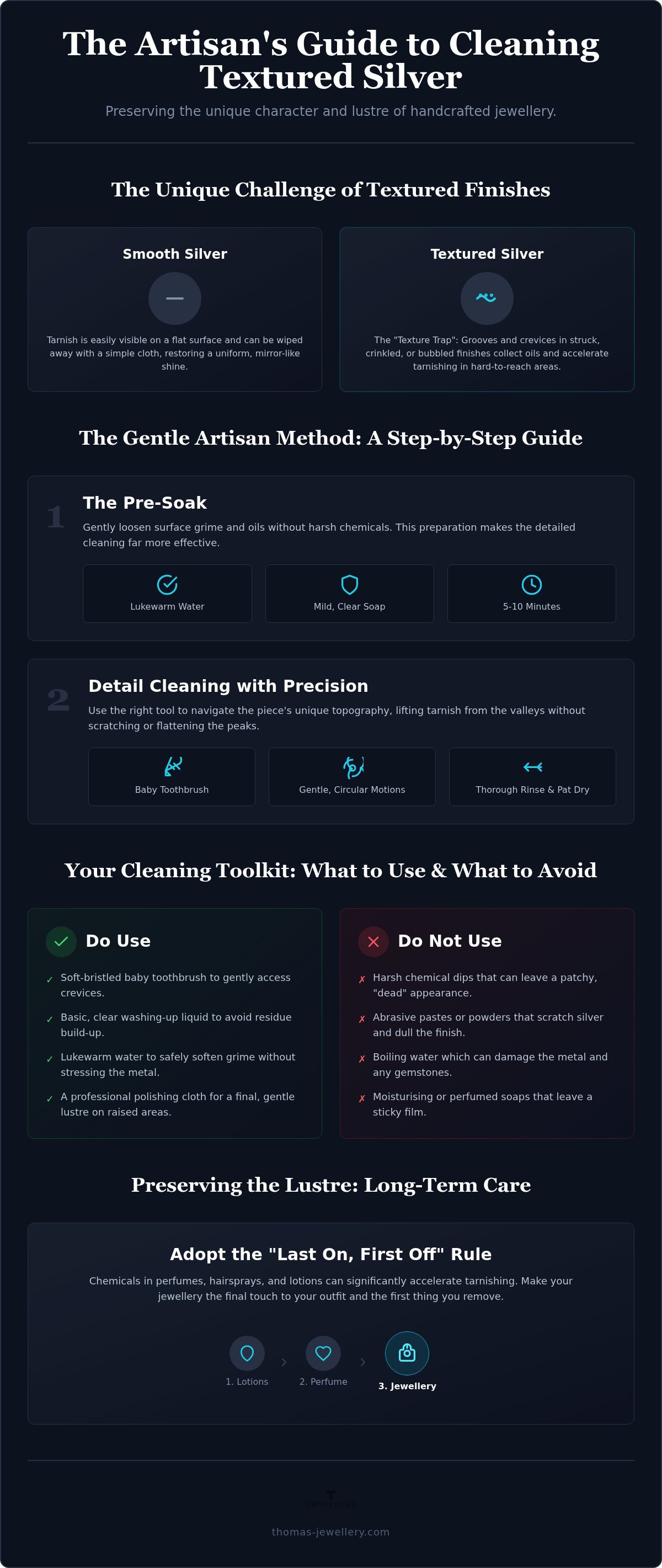
Textured silver is more than just metal; it's a landscape. From the deep, undulating folds of the Crinkled collection to the rhythmic, percussive marks found in Struck pieces, these surfaces are designed to catch the light in unexpected ways. However, the very features that make these designs so evocative also make them a magnet for atmospheric changes. When you are cleaning textured silver jewellery, you aren't just wiping a surface; you're navigating a miniature mountain range of silver. Every valley and ridge requires a thoughtful touch to ensure the original character remains visible.
Standard polishing cloths, whilst perfect for a flat band, often skim right over the valleys where tarnish truly takes hold. This is the "Texture Trap." In sculptural pieces like those in the Bubbles of Chapel Down collection, tarnish can settle between the spheres, dulling the effervescent glow that defines the work. The gentle art of cleaning textured silver jewellery requires a shift in perspective, moving away from vigorous rubbing toward a more considered, sculptural technique. Without this care, these dark shadows can become permanent, obscuring the delicate craftsmanship that makes the piece unique.
The Science of Tarnish on Sculptural Surfaces
Tarnish isn't a sign of poor quality or neglect. It's a natural chemical reaction between sterling silver and the sulphur compounds found in our everyday atmosphere. On a smooth surface, this darkening is obvious and easily swiped away. On sculptural surfaces, however, moisture and skin oils can become trapped in recessed areas, accelerating the process. Paradoxically, pieces kept for "special occasions" often darken faster than those worn daily, as stagnant air provides the perfect environment for sulphur to settle amongst the grooves. Understanding various Jewellery cleaning methods is essential for managing this inevitable process without causing harm to the delicate metal.
Texture vs. Smooth Silver: A Comparison of Care
While smooth silver relies on a mirror-like reflection to impress, textured silver finds its beauty in the interplay of light and shadow. If you over-polish a struck finish, you risk wearing down the crisp edges that the artisan intended to be sharp and defined. It's a delicate balance. The goal is never to make a textured piece look brand new or factory-flat. Instead, we aim to lift the heavy veil of oxidation whilst preserving the intentional depth of the design. A gentle, methodical approach ensures that the original spirit of the piece remains intact. This allows the handcrafted details to breathe once more, catching the light as they did the day they left the workshop.
The Gentle Artisan Method: A Step-by-Step Guide
Caring for your collection is a ritual that mirrors the patience of the making process. By adopting a "low and slow" philosophy, you ensure that the integrity of the metal is never compromised by haste or aggression. When cleaning textured silver jewellery, the goal is to gently coax away the darkening sulphur without flattening the very peaks and valleys that give the piece its soul. It starts with the right tools. An artisan’s secret weapon isn't a high-tech machine, but a simple baby toothbrush. Its bristles are designed for the utmost delicacy, making it perfect for navigating the complex topography of a struck or bubbled surface.
Before you begin, choose your cleaning agent with care. Avoid any washing-up liquids that boast "extra moisturising" properties or contain heavy perfumes. These additives often leave a stubborn, fatty film inside the deep grooves of your Crinkled Cufflinks or rings, which can actually attract more dust and grime over time. A basic, clear liquid is your best ally.
Step 1: The Pre-Soak
Begin by placing your jewellery in a small bowl of lukewarm water mixed with a few drops of soap. It's vital to avoid boiling water; extreme temperatures can cause unnecessary stress to the metal and any delicate settings. Let the pieces rest for 5 to 10 minutes. This quiet interval allows the solution to penetrate the deepest recesses, softening oils and loosening the surface grime that has settled amongst the textures. It's a moment of preparation that makes the subsequent cleaning far more effective.
Step 2: Detail Cleaning with Precision
Once the soak is complete, take your soft-bristled baby toothbrush and work in gentle, circular motions. Focus your attention on the "valleys" where tarnish tends to linger, such as the indentations in the Struck Collection. Soft bristles are vital because they reach into recessed textures without abrading the delicate silver surface. Avoid the temptation to scrub. Instead, let the tips of the bristles do the work, moving across the metal like a light breeze rather than a storm. This method ensures that every crinkle is reached without risking the original artisan finish.
Step 3: Drying and Final Inspection
Rinse each piece thoroughly under a cool tap to ensure no soapy residue remains. When drying, avoid rough towels that might snag on the edges of a sculptural design. A soft, lint-free cloth is best for patting the silver dry. For more intricate pieces, such as those in the Bubbles of Chapel Down Collection, a hairdryer on its coolest setting can help evaporate trapped moisture from between the spheres. Finally, hold the piece up to a natural light source. Check the deepest parts of the texture to ensure the lustre has been fully restored, leaving the silver ready for its next journey.
Navigating the Texture Trap: Avoiding Residue and Damage
Many enthusiasts, driven by a desire to see their silver sparkle once more, reach for the quickest solution available. However, when cleaning textured silver jewellery, speed is often the enemy of beauty. The deep valleys of a crinkled ring or the rhythmic indentations of a struck piece act as reservoirs for cleaning agents. If a product isn't perfectly suited to sculptural metal, it can leave behind a ghostly residue that is far more difficult to remove than the original tarnish. This "Texture Trap" can turn a cherished object into a dull, patchy disappointment if approached without the proper care.
Why Silver Dips are the "Chainsaw of Jewellery Care"
Silver dips function by chemically stripping the uppermost layer of metal. While this might seem efficient for a flat surface, it's devastating for an artisan piece. These liquids are indiscriminate; they remove the intentional patina that provides depth and contrast within the textures. A dipped piece often emerges with a "dead" or "flat" appearance, losing the soulful interplay of light and shadow that defines handcrafted work. Once that depth is gone, the piece can look like a cheap imitation of its former self. Only in the rarest cases of extreme, black oxidation should a dip even be considered, and even then, only under professional guidance to avoid a permanent loss of character.
Bicarbonate of soda pastes present a different kind of risk. Whilst often praised as a natural home remedy, these pastes dry into a hard, chalky substance that nests in the crinkles. This creates "white film" syndrome, where the recessed areas of your jewellery appear dusty or pale. In the Struck collection, these white deposits can obscure the crisp edges of the hammered marks, turning a sharp design into something muted and messy. For pieces with complex, bubbly designs, this residue can become nearly impossible to flush out with water alone, settling amongst the spheres and turning a vibrant piece into something that looks neglected rather than cherished.
Dealing with Stubborn Residue
Dealing with stubborn residue requires a surgeon's precision rather than a labourer's force. If you find yourself staring at dried polish caught in the grooves of your silver, do not reach for a pin or a needle. Metal on metal is a recipe for permanent scratches that no amount of buffing will hide. Instead, consider using an interdental brush. These tiny, flexible tools are perfect for sweeping out debris from the tightest corners without harming the silver. They offer the reach needed to clear the crinkles without the risk of physical damage.
When you have finished cleaning textured silver jewellery, ensuring the piece is completely dry is just as critical as the cleaning itself. Lingering moisture in the grooves can lead to unsightly water spots or uneven tarnishing, undoing all your hard work. A canister of compressed air can provide enough gentle pressure to dislodge trapped water from deep recesses. A final, careful inspection ensures that your jewellery isn't just clean, but truly restored to its original, vibrant state, ready to catch the light in all its sculptural glory.
Comparing Cleaning Solutions: What Works for Handcrafted Finishes?
When cleaning textured silver jewellery, the market offers a dizzying array of potions, pastes, and cloths. Each promises a return to radiance, yet few account for the complex topography of an artisan piece. Selecting the right method is about matching the solution to the specific need of the metal, whether you're seeking a quick highlight or a deep restoration. It's a choice between a surface-level refresh and a scientific deep-clean that reaches every hidden fold of a crinkled surface.
Polishing Cloths: A Surface Solution
Professional polishing cloths are a staple of any jewellery box. These are typically impregnated with a fine polishing compound that lifts tarnish through gentle friction. They're exceptional for accentuating the high-points of a struck finish, where the cloth only touches the ridges and leaves the darker, oxidised valleys intact. This creates a beautiful, sculptural contrast that makes the design pop. However, a cloth is essentially a surface tool. It cannot reach the depths of a crinkled ring or the spaces between the spheres in the Bubbles of Chapel Down collection. For those in the UK, choosing a high-quality, locally made cloth ensures the compound is gentle enough for fine silver without being overly abrasive.
The Foil and Bicarb Method: A Scientific Deep Clean
For pieces that have been tucked away for years and have developed a heavy, stubborn layer of tarnish, a more scientific approach is required. This method utilizes an electrochemical reaction known as ion exchange. By lining a bowl with aluminium foil and adding hot water and salt, you create a bath that physically transfers tarnish from the silver to the foil. It's a hands-off way to reach every crevice of a pendant without the need for abrasive scrubbing. Whilst highly effective, this method requires caution. It's too intense for jewellery containing stones or organic elements, as the heat and chemical shift can cause damage to more porous materials. For pure silver pieces like the Struck collection, it remains a powerful tool for heavy lifting.
Proprietary foams are often easier to rinse away than thick, viscous liquids, which can cling to the crinkles and leave a dull film. However, the artisan’s verdict remains steadfast. For the regular maintenance of your collection, nothing beats the simplicity of mild soap and water. It respects the metal’s history whilst gently lifting the day’s burdens. If you're looking to add a new piece to your collection that celebrates this interplay of light, you can browse our Struck Collection to see how these finishes come to life.
Ultimately, the goal is to preserve the .925 sterling silver standard, a quality benchmark first instituted in 1851. By avoiding harsh, cyanide-based cleaners, which have been prohibited by the FDA since 2010 due to their high toxicity, you protect both your health and the longevity of your jewellery. A thoughtful choice of cleaning solution ensures your pieces remain as extraordinary as the days they were designed to celebrate.
Preserving the Lustre: Long-term Care for Your Collection
Beyond the occasional ritual of cleaning textured silver jewellery, the longevity of your collection depends on the small, quiet habits of daily life. Silver is a living metal; it responds to its environment and the way it's handled. By adopting a few simple principles, you can ensure that the evocative depths of your handcrafted pieces remain as vibrant as the day they were first struck. It's about moving from reactive cleaning to a more proactive form of care that celebrates the metal's natural journey.
The "last on, first off" rule is perhaps the most vital habit to cultivate. It ensures that perfumes, hairsprays, and lotions, which contain chemicals that can nestle into the crinkles of your silver, never have the chance to dull the metal's spirit. Apply your scents and creams first, allowing them to settle completely before dressing yourself in your jewellery. Paradoxically, regular wear is one of the best ways to keep your silver radiant. The gentle friction of the metal against your skin or a soft woollen jumper acts as a continuous, subtle polish, preventing the heavy sulphur buildup that makes deep cleaning textured silver jewellery more frequent.
The Art of Storing Artisan Silver
When your jewellery isn't being worn, its storage environment becomes its world. Velvet-lined jewellery boxes are more than a luxury; they provide a soft, non-reactive sanctuary that protects sculptural edges from the air. For long-term storage, consider using small, airtight bags paired with anti-tarnish strips to chemically neutralise the sulphur in the atmosphere. To prevent the rhythmic ridges of one piece from scratching the delicate surface of another, wrap individual items in acid-free tissue paper. This specific type of paper is essential, as standard tissue often contains acidic compounds that can accelerate the very tarnishing you're trying to avoid. A little organisation goes a long way in maintaining the integrity of each unique finish.
Routine Maintenance for Everyday Elegance
Cultivating a "quick wipe" habit can transform the way your collection ages. After a day of wear, a brief buff with a soft, lint-free cloth removes skin oils and environmental dust before they have a chance to react with the silver. This allows you to spot the early, golden signs of tarnishing before they deepen into a stubborn black. If you're looking for more general tips on maintaining the soul of your pieces, you can read our guide on How to Clean Handcrafted Silver Jewellery for a broader perspective on artisan care.
Ultimately, we should celebrate the natural evolution of silver. A slight patina in the deepest valleys of a design can actually add character, highlighting the sculptural intent of the maker. If you're ready to find a new piece to cherish, explore our latest Struck Collection and see the beauty of texture for yourself. With the right care, these pieces don't just last; they become a part of your story, growing more beautiful with every passing year.
Embracing the Radiance of Handcrafted Silver
Restoring the life of your collection is a journey of patience and appreciation. By moving away from aggressive chemicals and adopting the "low and slow" method of cleaning textured silver jewellery, you preserve the intentional shadows and crisp ridges that define artisan work. Remember that a soft baby toothbrush and non-perfumed soap are your most reliable allies for reaching the depths of crinkled and struck finishes. These simple rituals don't just remove tarnish; they reconnect you with the story of the object itself.
Our contemporary designs are inspired by the quiet beauty of the British countryside, each piece handcrafted in the UK with meticulous artisan precision. Whether you are caring for a cherished heirloom or seeking a new sculptural statement, the right maintenance ensures your silver remains extraordinary for a lifetime. We provide a secure checkout with Apple Pay and PayPal for your peace of mind.
Discover the beauty of handcrafted texture at Thomas Jewellery and find a piece that speaks to your own sense of wonder. Your jewellery is a reflection of your story; keep it shining bright.
Frequently Asked Questions
Can I use toothpaste to clean my textured silver ring?
You should avoid using toothpaste for cleaning textured silver jewellery because many varieties contain silica or other abrasives that can permanently scratch the metal's surface. Whilst it might offer a temporary shine, these tiny scratches dull the artisan lustre over time and can trap even more tarnish in the future. A much safer alternative is a simple solution of lukewarm water and mild, non-moisturising washing-up liquid applied with a very soft baby toothbrush.
How often should I clean my handcrafted silver jewellery?
The frequency of care depends entirely on how often you wear your pieces and the environment they're kept in. For everyday items, a quick wipe with a lint-free cloth after each wear is ideal for removing skin oils before they react. A deeper, more methodical clean is usually only necessary once a month or when you notice the earliest golden hints of tarnish settling amongst the crinkles and folds of your collection.
Is it safe to use an ultrasonic cleaner for textured silver?
Ultrasonic cleaners are generally safe for solid sterling silver pieces like those in the Struck collection, but you must exercise caution if your jewellery features delicate stones or organic elements. The high-frequency vibrations can sometimes loosen settings or cause internal fractures in certain gems. If you're cleaning plain textured silver jewellery, an ultrasonic bath can effectively dislodge grime from deep crevices, but a gentle hand-wash is often just as effective and much safer for delicate designs.
Why does my silver jewellery turn black in the crevices?
This darkening is a natural chemical reaction caused by sulphur compounds in the atmosphere reacting with the silver to form silver sulphide. In textured pieces, these recessed areas act as tiny reservoirs that trap moisture, skin oils, and airborne pollutants more easily than smooth surfaces. Because these valleys aren't reached by the natural friction of your clothing or skin, the tarnish builds up more quickly, creating the deep black contrast often seen in older pieces.
Can I clean silver jewellery with bicarbonate of soda and foil?
Using the aluminium foil and bicarbonate of soda method is an effective scientific approach for lifting heavy tarnish without abrasive scrubbing. It works through ion exchange, transferring the darkening sulphide from your jewellery to the foil. However, you must be careful to rinse the piece thoroughly afterwards to prevent a chalky white residue from drying inside the textures. This method is best reserved for plain silver pieces and should never be used on jewellery containing pearls or porous gemstones.
What is the best way to dry jewellery with deep textures?
The most effective way to dry jewellery with deep textures is to combine a gentle patting motion with a focused stream of air. Start by using a soft, lint-free cloth to absorb the majority of the water, being careful not to snag any sculptural edges. To ensure no moisture remains trapped in the deepest crinkles or amongst the spheres of the Bubbles of Chapel Down collection, use a hairdryer on a strictly cool setting.
Does wearing silver in the shower help clean it?
Wearing your silver in the shower is generally not recommended as a cleaning method. Whilst water itself isn't the enemy, the humidity and the residue from shampoos, conditioners, and body washes can leave a stubborn film on the metal. This film can dull the artisan lustre and trap pollutants against the surface, potentially accelerating the tarnishing process. It's always best to remove your jewellery before bathing to keep the finish crisp and vibrant.
How do I remove tarnish from silver without losing the hammered finish?
To remove tarnish without losing the definition of a hammered or struck finish, you must avoid aggressive polishing that can wear down the metal's edges. Instead, use a soft-bristled baby toothbrush and a mild soapy solution to gently lift the oxidation from the valleys. This "low and slow" approach ensures you only remove the tarnish whilst preserving the intentional marks of the artisan, keeping the sculptural contrast that makes the piece so unique.