

Did you know that up to one in five women experiences a diagnosed nickel allergy, making it the most frequent contact allergen on the planet? For many, the simple joy of wearing a new pair of earrings is quickly replaced by the heat and itch of irritation, leading to the inevitable question: does sterling silver contain nickel? It's deeply frustrating to invest in a piece that promises elegance only to find it's unwearable, leaving you wary of "hypoallergenic" labels that often feel like empty marketing.
We believe that beauty should never come at the cost of comfort. In this guide, you'll discover the truth about silver purity and how to choose handcrafted, skin-safe jewellery that respects your wellbeing. We'll explore the UK REACH migration limits for 2026, the vital role of the 925 hallmark, and why the thoughtful approach of an artisan studio offers a level of safety that mass-produced items often lack. By understanding exactly what touches your skin, you can return to the pleasure of choosing jewellery whilst feeling entirely confident in its quality and craftsmanship.
Key Takeaways
- Understand why genuine 925 silver is traditionally alloyed with copper and learn the definitive answer to "does sterling silver contain nickel" in artisan versus mass-market pieces.
- Navigate the 2026 UK REACH regulations to understand the legal limits of nickel release and how they ensure your jewellery remains comfortable for daily wear.
- Discover how to identify the specific symptoms of a nickel allergy and use simple at-home testing methods to verify the metal composition of your favourite accessories.
- Learn why the oversight found in small-batch British artisan studios provides a safer, more reliable alternative to unregulated high-street imports.
- Master the art of spotting official UK hallmarks so you can invest in quality, contemporary pieces that won't cause skin irritation or redness.
What is Sterling Silver? Understanding the 925 Composition
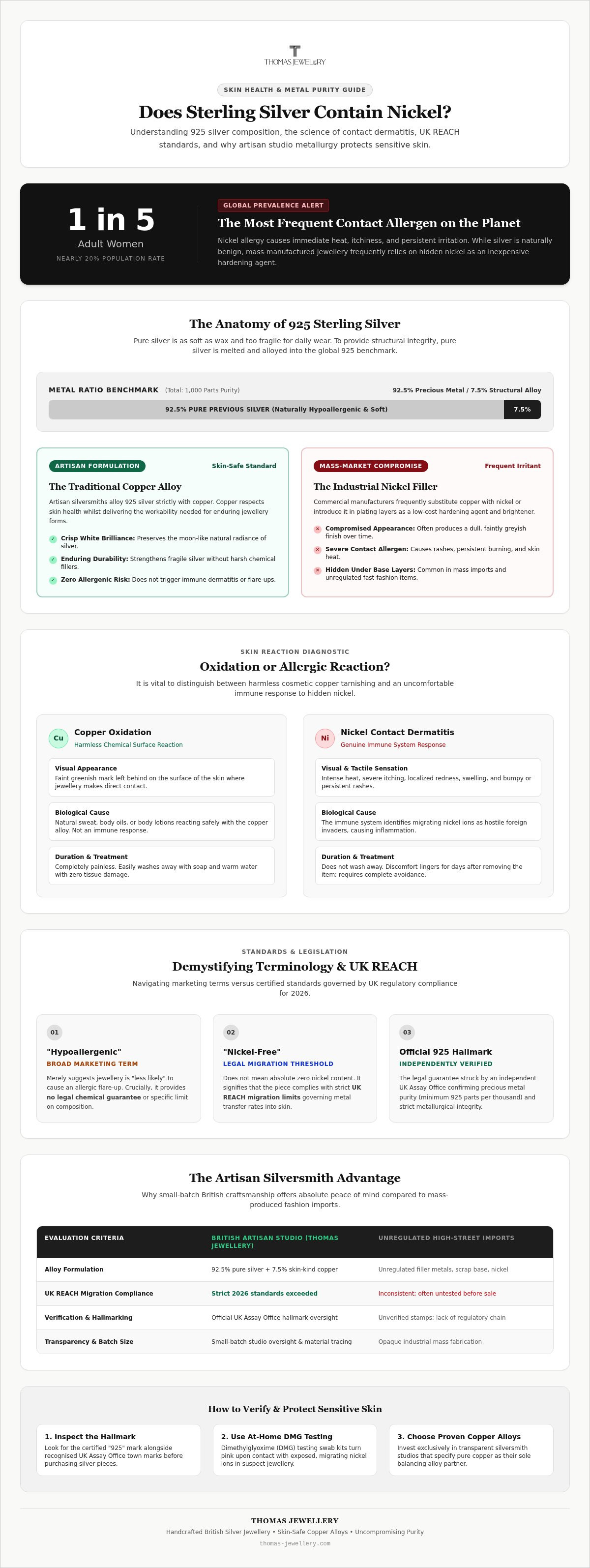
Sterling silver is a material born from necessity and refined by centuries of tradition. In its purest state, silver is remarkably soft, almost like wax in the hands of a maker. Whilst this malleability is beautiful, it makes for fragile objects that bend and scratch under the gentle pressure of daily life. To create pieces that endure, we must blend pure silver with other metals to forge an alloy. The global benchmark for this balance is 925 sterling silver, a standard that ensures 92.5% of the piece is pure, precious metal.
The remaining 7.5% is where the story of quality truly begins. Traditionally, and within our own studio, this portion is composed entirely of copper. This addition provides the structural integrity required for fine metalwork without compromising the bright, moon-like lustre that makes silver so captivating. However, the presence of these secondary metals often leads people with sensitive skin to ask: does sterling silver contain nickel? While the traditional recipe excludes it, the reality of modern manufacturing is often more complex.
The Anatomy of an Alloy
The 925 hallmark is more than just a stamp; it's a promise of purity that has governed the trade for generations. By adhering to the precise composition of 925 sterling silver, makers ensure that the metal remains both valuable and functional. In the context of handcrafted silver jewellery UK, copper is the preferred partner because it preserves the metal's workability whilst adding significant strength. This allows for the creation of intricate textures and enduring forms that won't lose their shape over time. High-purity sterling silver should have a crisp, white brilliance, whereas alloys diluted with cheaper fillers can often appear slightly grey or dull to the trained eye.
Why Nickel Entered the Equation
If copper is the ideal alloy, you might wonder why nickel ever became part of the conversation. In mass production, nickel is often used as a hardening agent or a "brightener" because it's significantly cheaper than more traditional alternatives. It's frequently found in the base layers of silver-plated items or used as a filler in lower-quality "925" imports to reduce costs. Artisan silversmiths take a different path. We prioritise traditional copper alloys because they are kinder to the skin and offer a richness of finish that industrial fillers simply cannot replicate. Choosing artisan work means choosing a transparent process where the safety of the wearer is as important as the design itself.
The Nickel Question: Does Your Silver Contain it?
When you find a piece of jewellery that speaks to your soul, the last thing you want to worry about is a painful reaction. So, does sterling silver contain nickel? In an ideal world, the answer would be a simple no. High-quality sterling silver is traditionally alloyed with copper to ensure it remains skin-safe and durable. However, the mass-market reality is often more complex. Many industrial manufacturers use nickel because it's an inexpensive way to achieve a high-shine finish or to harden the metal quickly. For the nearly 20% of adult women who suffer from a nickel allergy, these hidden additions can lead to uncomfortable allergic reactions to nickel in jewellery, manifesting as redness, itching, or persistent rashes.
It's also essential to distinguish between a genuine allergy and harmless skin discolouration. Copper, the traditional partner to silver, can sometimes leave a faint greenish mark on the skin when it reacts with your natural oils or lotions. This is merely oxidation, not an immune response. A nickel reaction, by contrast, feels like a heat or an itch that doesn't simply wash away. Choosing pieces from a transparent source allows you to enjoy your collection without these lingering doubts.
Nickel-Free vs Hypoallergenic: The Difference Matters
The labels we see in shops can be confusing. "Nickel-free" doesn't actually mean the metal contains zero nickel. Instead, it refers to a legal limit on how much nickel can migrate from the jewellery into your skin. In the UK, REACH regulations set these strict thresholds to protect consumers. "Hypoallergenic" is an even broader term, suggesting the piece is unlikely to cause a reaction but offering no specific chemical guarantee. Knowing your silversmith is the only way to be certain that the materials used are truly refined and free from harmful fillers.
Common Sources of Nickel in Jewellery
Nickel often hides in the places you'd least expect. In mass-produced items, even if the main body is silver, the earring posts or the small springs inside clasps might contain nickel to add strength. Silver-plated costume jewellery is another common culprit, as nickel is frequently used as a "strike" layer between the base metal and the silver coating. As that thin plating wears away, the nickel is exposed directly to your skin. Investing in solid sterling silver rings from an artisan studio ensures that every component is chosen with your comfort in mind. Exploring our collections allows you to find your next favourite piece, safe in the knowledge that purity is never compromised.
UK Regulations and Hallmarking Standards for 2026
The UK maintains some of the most rigorous consumer protections in the world, ensuring that the jewellery you wear is as safe as it is beautiful. When you find yourself wondering, "does sterling silver contain nickel", the answer is legally governed by the UK Hallmarking Act 1973. This legislation dictates that any silver item weighing 7.78 grams or more must be independently tested and hallmarked by one of the four UK Assay Offices to be sold as silver. This process provides a vital safeguard, confirming that the metal meets the strict 925 fineness standard and hasn't been diluted with harmful or inferior base metals.
For the wearer, this system offers a level of transparency that mass-produced, un-hallmarked imports often lack. By choosing pieces from an independent UK artisan, you're opting for a transparent supply chain where every component is verified. This oversight is particularly crucial for those with sensitive skin, as it ensures the alloy composition remains traditional and free from the industrial fillers that frequently trigger irritation.
Reading the Marks: Your Quality Guarantee
Every hallmarked piece carries a story of authenticity told through three compulsory symbols. First is the Sponsor’s mark, which identifies the studio or silversmith. Next is the Fineness mark, typically the 925 stamp, followed by the Assay Office mark. On more substantial items like artisan silver cufflinks, these marks serve as a permanent seal of trust. It's important to remember the 7.78g threshold; whilst smaller items are exempt from mandatory hallmarking, reputable makers still adhere to the same purity standards across their entire collection. If a larger piece lacks these marks, it's a significant red flag regarding its true composition.
REACH Compliance and Nickel Release
Whilst hallmarking confirms silver purity, UK REACH regulations specifically address the symptoms of nickel allergy by limiting the "migration" of metals. Under these 2026 standards, jewellery intended for prolonged skin contact must not release more than 0.5 micrograms of nickel per square centimetre per week. For piercings, the limit is even stricter at 0.2 micrograms. Modern testing methods, such as the EN 1811:2023 standard, ensure that even if trace amounts are present, they cannot leach into the skin in harmful quantities. Independent British brands often go beyond these legal minimums, choosing alloys that avoid nickel entirely to ensure absolute comfort for every wearer.
How to Detect Nickel and Protect Your Sensitive Skin
The sensation of "jewellery itch" is often the first whisper that something is wrong. It starts as a faint warmth or a subtle tingle beneath a ring or against an earlobe, quickly evolving into a distraction you can't ignore. If you've ever experienced this discomfort, you've likely asked: does sterling silver contain nickel? Whilst we've established that high-quality silver shouldn't, the reality is that many people own pieces from diverse sources, some of which may hide trace amounts of this common allergen. Understanding how to identify a reaction and test your collection at home is the first step toward a more comfortable relationship with your jewellery.
It's also worth distinguishing a true allergy from the harmless green mark that copper sometimes leaves behind. As we discussed earlier, copper oxidation is a natural chemical reaction with your skin's pH, whereas a nickel reaction is an immune response. One is a temporary stain; the other is a physical irritation that requires a change in how you choose your metals.
Identifying a Reaction
Nickel dermatitis is a persistent immune response where the body identifies nickel ions as harmful, leading to localised inflammation. Unlike a sharp sting, this reaction is frequently delayed. You might wear a piece for an entire afternoon before the redness, itching, or small bumps appear, typically manifesting 24 to 48 hours after the initial contact. It's also important to differentiate this from irritation caused by trapped soap or lotions. If the skin is merely dry or flaky, it may be a hygiene issue. However, if the area is weeping, intensely itchy, or blistering, your skin is likely reacting to the metal itself.
At-Home Testing and Care
If you're suspicious of a specific heirloom or a high-street find, the Dimethylglyoxime (DMG) test is an invaluable tool. These at-home kits use a simple chemical swab that turns pink if it detects nickel ions on the surface of the metal. It's a non-destructive way to gain peace of mind, especially for vintage silver, which was often crafted before modern safety standards were established. Modern artisan pieces are far less likely to trigger these results, but testing older items can help you curate a safer collection.
Beyond testing, maintaining the health of your skin involves keeping your jewellery pristine. Dust, skin cells, and moisture can accumulate in the textures of your favourite pieces, exacerbating existing sensitivities. Regularly following a silver jewellery care guide ensures that your pieces remain free from buildup that might cause irritation. For pieces you suspect contain nickel but cannot part with, a specialised jewellery shield can offer a temporary barrier, though moving toward high-purity alloys is the only permanent solution for sensitive skin.
Ready to invest in pieces that feel as good as they look? Explore our collection of skin-safe, handcrafted silver jewellery and find your next favourite today.
The Artisan Advantage: Choosing Thomas Jewellery for Peace of Mind
In the quiet of a morning, as you reach for a favourite piece to start your day, there should only be a sense of anticipation, never a flicker of worry. When you ask, does sterling silver contain nickel, you aren't merely seeking a chemical breakdown; you're looking for a promise of comfort. At Thomas Jewellery, that promise is woven into every hammer strike and polished curve. By choosing small-batch artisan production, we maintain a strict oversight that mass-market factories simply cannot replicate. We select our metal sources with the same care we apply to our designs, ensuring that the alloy is always high-purity copper, never a shortcut filled with industrial allergens.
This unhurried approach allows us to transform raw silver into objects of tactile wonder. Our focus remains on the inherent beauty of the metal, elevated through unique textures that invite touch without consequence. It's about making ordinary days feel extraordinary, knowing that the piece against your skin is as pure as the inspiration behind it. By removing the fear of irritation, we return the focus to the joy of the object itself.
Sculptural Silver Without the Stress
Whether you're drawn to the bold presence of our contemporary sterling silver cocktail rings or the delicate movement found within the Butterflies Collection, you can wear these statements with absolute confidence. Our artisan commitment to transparency means we never hide behind vague labels or unregulated imports. From the rugged, light-catching facets of the Struck Collection to the organic, flowing lines of our crinkled finishes, every design prioritises the wellbeing of the wearer. We believe that bold, sculptural jewellery should be accessible to everyone, especially those who have previously been let down by mass-produced items.
A Personal Connection to Your Jewellery
There is a profound difference between a piece of "fast fashion" and a work of artisan craft. As a Creative Observer, I find inspiration in the subtle details of the world, from the way light hits a vineyard to the intricate patterns of nature. This deep connection to the work ensures that quality is never sacrificed for speed. Handcrafted silver is a more sustainable and skin-friendly choice, built to last a lifetime rather than a single season. When you invest in a piece from our studio, you're receiving an item that is independently hallmarked and verified in the UK, providing a final, legal guarantee of its purity. It's more than just jewellery; it's a legacy that respects both the maker and the wearer.
Choosing Beauty Without Compromise
Your journey with jewellery should be one of quiet delight, free from the physical discomfort of irritation. As we have explored, the answer to whether or not does sterling silver contain nickel lies in the integrity of the maker. Whilst mass-produced items often hide inexpensive fillers, true 925 sterling silver alloyed with copper remains the benchmark for sensitive skin. By looking for official Assay Office marks and understanding the 2026 REACH regulations, you can curate a collection that respects your wellbeing as much as your personal style.
At Thomas Jewellery, we believe in the power of contemporary British design to make every moment feel significant. Our commitment to artisan small-batch quality ensures that every piece is UK hallmarked sterling silver, offering you a verified guarantee of purity. You deserve to wear bold, sculptural forms without the lingering fear of a reaction. Elevate your everyday style with our handcrafted, skin-safe silver collections and rediscover the pleasure of wearing jewellery that feels as beautiful as it looks. Let your next piece be a testament to quality that lasts a lifetime.
Frequently Asked Questions
Is all 925 sterling silver nickel-free?
Not all sterling silver is created equal. Whilst the legal 925 standard requires 92.5% pure silver, the remaining 7.5% can vary between manufacturers. High-quality artisan pieces use copper as the secondary metal, but mass-produced items sometimes include nickel to reduce costs or increase durability. This is why choosing a transparent maker is essential for anyone who frequently asks "does sterling silver contain nickel" before making a purchase.
Can I wear sterling silver if I have a severe nickel allergy?
Individuals with severe sensitivities can safely wear sterling silver if it is crafted by an artisan who guarantees a nickel-free alloy. Pure silver and copper are rarely allergens, so the reaction usually stems from hidden industrial additives. By choosing UK-hallmarked pieces from a small-batch studio, you ensure the metal meets strict purity standards, allowing you to enjoy bold designs without the risk of an immune response.
What is the best metal for sensitive ears?
For those with sensitive ears, the most reliable choices are high-purity sterling silver, titanium, or medical-grade stainless steel. Piercings are particularly vulnerable to metal migration, so the quality of the earring post is paramount. We prioritise 925 sterling silver for our collections because it offers a biocompatible, elegant solution that avoids the harsh chemical fillers often found in lower-priced costume jewellery.
How can I tell if my silver ring contains nickel?
Verifying the composition of your jewellery involves looking for official UK hallmarks, which provide a legal guarantee of metal fineness. If you are still uncertain, an at-home Dimethylglyoxime (DMG) test kit can confirm if a piece releases nickel ions. This is particularly useful for vintage items or unregulated imports where the question of does sterling silver contain nickel might not be clearly answered by the seller's documentation.
Does rhodium plating prevent nickel allergies?
Rhodium plating acts as a temporary barrier, but it is not a permanent solution for allergy sufferers. Whilst the plating is intact, it prevents nickel from touching the skin. However, rhodium naturally wears away over time through friction and contact with skin oils. Once the underlying metal is exposed, the allergic reaction will return, making solid, high-purity sterling silver a much safer long-term investment for your skin health.
Why does some sterling silver make my skin itch?
Itching is typically caused by nickel ions leaching into the skin or by "jewellery itch," which occurs when moisture and soap residue become trapped against the metal. If the irritation persists or turns into a rash, it is likely a response to hidden nickel fillers. Maintaining a regular cleaning routine and choosing artisan alloys helps to eliminate these irritants, ensuring your jewellery remains a source of pleasure rather than discomfort.
What is the difference between silver-plated and sterling silver regarding nickel?
Silver-plated jewellery is significantly more likely to cause reactions because it often features a nickel "strike" layer beneath the thin silver coating. This layer helps the silver adhere to the base metal but is a common allergen. In contrast, solid sterling silver is a consistent alloy throughout the entire piece. Investing in solid, handcrafted items ensures that even as the piece ages, no hidden reactive metals will ever reach your skin.
Is nickel used in the soldering process of artisan jewellery?
In professional artisan studios, nickel is not used in the soldering process. We utilise silver-based solders that are specifically formulated to match the purity and colour of the 925 alloy. This ensures that every joint in a piece, from a delicate butterfly wing to a robust cocktail ring, remains entirely skin-safe. Avoiding industrial solders is a hallmark of the thoughtful craftsmanship that distinguishes artisan work from mass-produced fashion accessories.