

You've likely felt that familiar, unwelcome heat in your earlobes after just an hour of wearing a new pair of "hypoallergenic" studs. It's a frustrating compromise that many of us accept, assuming that beautiful design and skin comfort are mutually exclusive. We understand the disappointment of finding a piece you love, only for it to cause the itchy redness associated with "mystery metals" and poor material standards. Finding the best silver earrings for sensitive ears UK shouldn't mean settling for plain, clinical styles that lack soul or character. You deserve jewellery that feels as light and effortless as a morning breeze against your skin.
In this guide, we'll share why handcrafted 925 sterling silver is the ultimate choice for those who react to mass-produced alternatives. You'll discover how to navigate the latest 2026 safety standards, including UK REACH regulations that limit nickel release to protect your well-being. We'll explore how to identify genuine hallmarking and why choosing an artisan brand ensures you know exactly what touches your skin. From the delicate flutter of the Butterflies collection to the architectural curves of the Bubbles of Chapel Down, you'll learn how to choose wearable art that prioritises both your health and your unique aesthetic.
Key Takeaways
- Learn why nickel is the primary cause of earlobe irritation and how your skin reacts to internal contact with common "mystery metals" found in high-street jewellery.
- Discover why 925 sterling silver is the foundation of the best silver earrings for sensitive ears UK, providing a skin-safe alternative to mass-produced alloys.
- Explore how artisanal finishing and sculptural designs, like those in the Butterflies collection, ensure that weight and texture never irritate delicate piercings.
- Master the "Hygiene First" rule to maintain your jewellery's lustre whilst preventing the buildup of bacteria that often mimics a metal allergy.
- Understand the importance of British hallmarking and artisanal transparency in choosing wearable art that prioritises your skin's health and comfort.
What Makes Ears Sensitive to Jewellery?
Many of us have experienced that sudden, sharp heat in an earlobe that signals an unwanted reaction. It's a quiet, persistent discomfort that can turn a moment of self-expression into an afternoon of irritation. This sensitivity isn't just a minor quirk of your skin; it's often a physiological response to the materials we choose to wear. Unlike a necklace that rests gently against the collarbone, an earring creates a unique challenge because the metal passes through the skin, establishing direct internal contact. This makes the earlobe significantly more reactive than other areas, as the body's immune system is more likely to detect and reject trace elements it deems intrusive.
To understand this better, we must look at what is metal-induced contact dermatitis? This condition is essentially an overactive immune response where the skin becomes inflamed after touching specific metals. While symptoms can range from a mild, nagging itch to the tell-tale "green skin" caused by oxidation, the most common sign is a red, weeping rash that lingers long after the jewellery is removed. In the UK jewellery market, the term "hypoallergenic" signifies that a piece has been crafted to be less likely to cause an allergic reaction, typically by adhering to strict limits on the release of sensitising metals like nickel, lead, and cadmium.
The Role of Nickel in Modern Jewellery
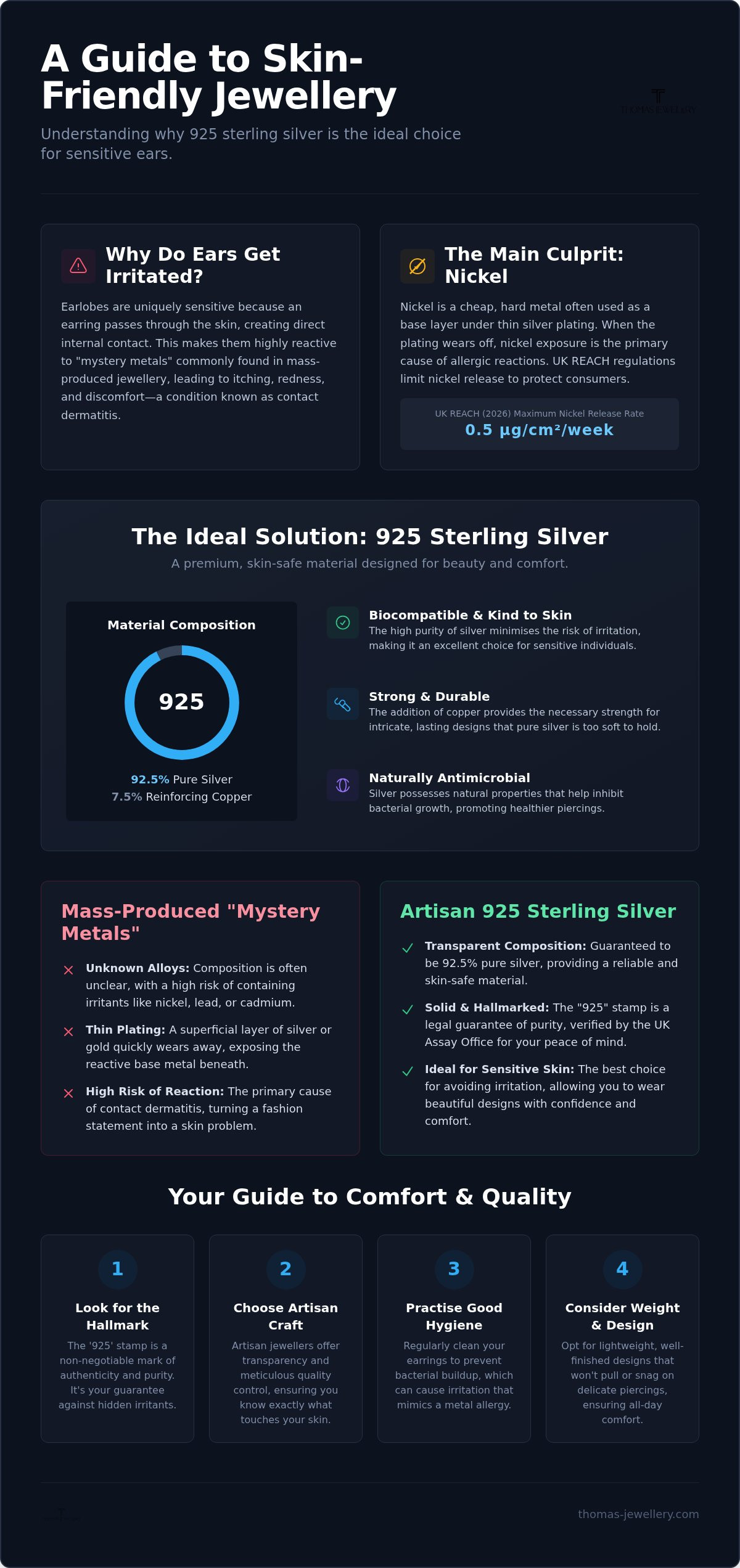
Nickel is the primary culprit behind most ear irritations. Because it's inexpensive and incredibly hard, mass-production factories often use it as a strengthening agent or as a base layer beneath thin silver plating. Under the UK REACH regulations updated in January 2026, the maximum rate of nickel release is strictly capped at 0.5 μg/cm2/week to protect consumers. However, once a thin layer of plating wears down through daily use, the underlying nickel is exposed to your skin. This is why seeking out the best silver earrings for sensitive ears UK is so vital; it's about choosing solid, high-quality materials where the artisan knows exactly what has been blended into the metal.
Identifying a Metal Reaction
Distinguishing between a genuine allergy and simple irritation can be tricky. A true metal allergy usually manifests as a reaction within 12 to 48 hours of wear, often feeling like a persistent "burn." In contrast, bacterial irritation might occur if earrings aren't cleaned regularly, leading to a dull ache rather than a sharp itch. When you wear "mystery metals" from high-street retailers, you're often exposing your piercings to inconsistent alloys that haven't been tested for long-term skin health. For those with delicate skin, the transition to artisan-crafted 925 sterling silver often provides an immediate sense of relief, as the purity of the material respects the skin's natural balance.
Why 925 Sterling Silver is Ideal for Sensitive Skin
Sterling silver is often celebrated for its luminous glow, but its true beauty lies in its thoughtful composition. By blending 92.5% pure silver with 7.5% copper, artisans create a material that is both durable and kind to the skin. Pure silver, whilst exceptionally gentle, is too soft to hold the intricate, sculptural forms of fine jewellery; it would bend and lose its shape with daily wear. Copper provides the necessary strength without compromising the metal's biocompatibility. This balance is essential for those seeking the best silver earrings for sensitive ears UK, as it ensures the jewellery remains structural yet safe. Silver also possesses natural antimicrobial properties, which can help maintain the health of both new and well-established piercings by inhibiting the growth of certain bacteria. Thomas Jewellery’s artisan approach ensures that every piece is crafted with a meticulous eye on metal purity, eliminating the risks associated with unknown industrial fillers.
The Importance of British Hallmarking
The tiny "925" stamp on an earring post is more than just a number. It is a promise of quality. In the UK, the Assay Office provides a rigorous layer of protection, testing jewellery to ensure it meets legal standards for precious metal content. This process is vital for understanding nickel allergies and avoiding them, as it prevents fraudulent "silver" that might contain hidden irritants from entering the market. When you choose an artisan piece, you gain a level of transparency that mass-market imports simply cannot offer. Every hallmarked item carries a legacy of trust, ensuring that what touches your skin is exactly what the maker intended.
Sterling Silver vs. Surgical Steel
While surgical steel is a common choice for those with sensitivities, it often lacks the refined, lightweight elegance of sterling silver. Steel is a utilitarian metal, often feeling heavy or cold against the lobe. Sterling silver, by contrast, warms to the body’s temperature and offers a delicate weight that won't pull on sensitive piercings. There's also the matter of longevity. If silver tarnishes, a gentle polish restores its original brilliance; once the plating on steel wears away, the piece is often beyond repair. Knowing your maker means you aren't just buying a product; you're investing in a legacy of care. You can explore these qualities in our handcrafted silver collections, where every curve is designed with your comfort in mind.
Choosing Your Perfect Pair: Styles That Combine Comfort and Artistry
Selecting jewellery is an intimate process. It's a choice that reflects your personality whilst respecting the physical needs of your skin. For many, the search for the best silver earrings for sensitive ears UK begins with a simple desire for comfort. However, comfort shouldn't mean a compromise on beauty. When you choose a pair of earrings, the physical weight is just as important as the aesthetic. Heavier designs can cause a persistent pull on the piercing hole, creating tiny tears in the tissue that invite irritation and prolong sensitivity. By prioritising lightweight, sculptural forms, you allow your ears to breathe and heal.
The finish of the metal also plays a vital role in your daily comfort. Mass-produced items often have microscopic burrs or sharp edges left behind by industrial moulds. These tiny imperfections can cause micro-scratches inside the ear canal, leading to redness and swelling. Handcrafted pieces are meticulously polished by an artisan, ensuring every surface that touches your skin is smooth and intentional. Beyond the finish, understanding British silver hallmarks is the best way to verify that your chosen style is made from the high-purity metal your skin requires. Whether you prefer the security of traditional butterflies or the sleekness of a hook, ensure the closure is made from the same 925 sterling silver as the rest of the piece.
Nature-Inspired Studs for Daily Wear
Studs are often the most reliable starting point for those with reactive skin. They sit flush against the lobe, minimising movement and friction. Our Butterfly Collection offers a perfect example of how symbolic design can meet practical needs. These pieces are exceptionally light, making them ideal for all-day wear. Similarly, the rounded, organic shapes found in the Bubbles of Chapel Down Collection eliminate sharp corners, providing a soft, tactile experience. These nature inspired silver jewellery designs prove that you can wear meaningful art without the fear of a reaction.
Contemporary Silver Drops and Hoops
You don't have to limit yourself to small studs to keep your ears happy. Statement pieces can be perfectly safe if they are balanced correctly. The Struck Collection, for instance, uses clever texturing and light-reflecting surfaces to create a bold visual impact without adding unnecessary bulk. When choosing drops or hoops, always check that the ear wire is solid sterling silver. This ensures that the part of the earring in constant contact with the piercing is hypoallergenic and free from the hidden nickel often found in cheaper components. By focusing on artisan quality, you can confidently wear larger, contemporary styles that celebrate your individual flair.
How to Clean and Wear Silver Earrings to Minimise Irritation
Owning the best silver earrings for sensitive ears UK is only the first step toward a lifetime of comfortable wear. To truly protect your skin, you must adopt a "Hygiene First" philosophy. Whilst the decorative front of your earring catches the light, it is the post—the part in constant contact with your piercing—that requires the most attention. Residual oils, dead skin cells, and microscopic dust can accumulate on the metal over time, creating a breeding ground for bacteria. This buildup often mimics the symptoms of a metal allergy, causing the same redness and itching that we try so hard to avoid. Regular, gentle cleaning ensures that the surface remains as pristine as the day it left the artisan's bench.
It is also essential to distinguish between natural silver tarnish and actual metal degradation. Tarnish is simply silver sulphide, a dark film that forms when silver reacts with sulphur in the air. Whilst tarnish can sometimes irritate exceptionally delicate skin, it is easily removed. Metal degradation, however, occurs in plated jewellery when the surface layer wears away to reveal reactive base metals beneath. For solid 925 sterling silver, a quick sanitising routine will suffice. You can find more detailed advice in our how to clean handcrafted silver jewellery guide, but a simple soak in warm water with a drop of mild, pH-neutral soap is often all that is needed to maintain skin health.
The Daily Routine for Sensitive Ears
Your habits play a significant role in how your ears feel. Moisture is a primary catalyst for irritation, so it's vital to remove your silver earrings before showering or sleeping. This prevents water from becoming trapped against the piercing, which can soften the skin and make it more prone to micro-tears. We recommend following the "Last On, First Off" rule. Perfumes, hairsprays, and lotions contain chemicals that can accelerate oxidisation and leave irritating residues on the metal. If your ears feel slightly "tingly" after a long day, a quick wipe with a sterile saline solution can provide immediate relief and help maintain a healthy environment for your piercings.
Storing Your Artisan Silver
Proper storage is a quiet act of preservation. When your jewellery is not in use, keep it in small, airtight pouches. This simple step prevents the air from reaching the silver, significantly slowing the tarnishing process. Be mindful of "cross-contamination" within your jewellery box. Storing your high-quality silver alongside cheaper, nickel-heavy pieces can sometimes lead to metal transfer, which might trigger a reaction. A soft polishing cloth is your best friend; it keeps the surface smooth and reflective, ensuring that your wearable art remains a joy to wear. You can explore our collection of skin-safe silver to find pieces designed to last a lifetime with the right care.
Discover Handcrafted British Silver: The Thomas Jewellery Collection
At Thomas Jewellery, we believe that the objects we wear should be more than mere accessories. They are quiet companions that celebrate the extraordinary in the ordinary moments of our lives. For the shopper who refuses to compromise on skin health or sculptural beauty, our focus on contemporary silver offers a sanctuary from the mass-produced. We understand that finding the best silver earrings for sensitive ears UK is a journey of trust. By choosing a piece from an independent British artisan, you aren't just selecting a design; you're ensuring total material accountability from the moment the silver is melted to the final polish. This personal connection to the maker provides a level of transparency that high-street retailers simply cannot match.
Every piece in our collection is a reflection of a thoughtful observation, whether inspired by the movement of water or the delicate flutter of a wing. We've designed our earrings to be wearable art that respects the delicate nature of your skin, using only high-purity 925 sterling silver. This commitment ensures that your jewellery remains a pleasure to wear from morning until night, free from the worry of a reaction. Whether you're shopping for yourself or searching for a meaningful gift, our online gallery offers a curated experience where the narrative behind the work is as important as the finished product itself.
Artisan Quality You Can Trust
Our commitment to silver jewellery UK is rooted in the tactile reality of the workbench. When a piece is "struck" or "crinkled," it gains a unique, light-catching texture that reflects the hand of the maker. This handcrafted approach means we know every element within our metal, ensuring that no hidden irritants find their way into your piercings. It's a sensory experience that prioritises the wearer's comfort as much as their aesthetic. From the smooth finish of a post to the balanced weight of a drop, each creation is a testament to the belief that jewellery should feel as good as it looks against the skin.
Find Your Next Favourite Pair
As you look to expand your collection, we invite you to explore the organic rhythms of our signature ranges. The Bubbles of Chapel Down Collection captures the effervescence of a specific memory, whilst the Butterflies Collection serves as a symbolic reminder of transformation and grace. These designs are perfect for those seeking a thoughtful gift that shows a deep consideration for the recipient's well-being. You can Browse the full Thomas Jewellery earring collection online with the confidence that each piece meets our exacting standards for purity and contemporary style. Beautiful jewellery should always be a source of joy, never a cause of pain, allowing you to move through the world with effortless elegance.
Embrace Artistry Without Compromise
Your journey toward finding the best silver earrings for sensitive ears UK doesn't have to be a choice between clinical safety and expressive design. By prioritising British Hallmarked 925 Sterling Silver, you're choosing a material that respects your skin's natural balance whilst offering a timeless, luminous glow. We've explored how the artisan's touch ensures every edge is smooth and every alloy is transparent, giving you the peace of mind that only comes from knowing exactly what you're wearing. When you understand the science of your skin and the integrity of the metal, you can shop with a sense of wonder rather than worry.
Whether you're drawn to the delicate flutter of our unique nature-inspired designs or the bold textures of our contemporary collections, your jewellery should feel like a natural extension of yourself. Every piece we create is handcrafted with an artisan's attention to detail, ensuring that beauty and comfort coexist in every curve. It's time to rediscover the joy of wearing earrings that tell a story without causing a moment of irritation. Let your next pair be a celebration of your style and a testament to the care you deserve.
Elevate your style with artisan silver earrings designed for comfort
Frequently Asked Questions
Can I wear sterling silver earrings if I have a nickel allergy?
Yes, you can wear them if they are genuine 925 sterling silver. This alloy consists of 92.5% pure silver and 7.5% copper, omitting the nickel that triggers most allergic reactions. In the UK, strict REACH regulations updated in 2026 ensure that compliant jewellery remains within safe limits for nickel release to protect your skin.
How do I know if my silver earrings are high quality in the UK?
Check for the 925 hallmark stamped on the post or the body of the earring. This mark is a legal requirement in the UK for silver items over a specific weight and signifies that the piece has been verified for purity by an Assay Office. It's the most reliable way to identify the best silver earrings for sensitive ears UK.
Why do my ears hurt even when I wear 'hypoallergenic' earrings?
The term 'hypoallergenic' is often used as a descriptive label rather than a regulated medical guarantee. Some pieces may still contain trace irritants or have a thin plating that eventually wears away to reveal reactive base metals. Additionally, microscopic burrs on mass-produced posts can cause physical irritation that mimics the symptoms of a metal allergy.
Is 925 sterling silver the same as pure silver for sensitive ears?
Pure silver is 99.9% silver, whilst 925 sterling silver is an alloy designed for daily durability. Whilst both are exceptionally kind to the skin, pure silver is far too soft for functional jewellery and would easily bend out of shape. The copper used in sterling silver provides the strength needed for sculptural designs without compromising biocompatibility.
Can I wear silver earrings in a new piercing?
It is best to wait until your piercing is fully healed, usually six to eight weeks, before switching to sterling silver. Professional piercers typically recommend titanium for the initial healing phase because it is completely inert. Once the internal tissue has stabilised, high-quality sterling silver becomes an excellent and safe choice for regular wear.
What is the best way to sanitise earrings for sensitive ears?
Use warm water and a drop of mild, pH-neutral soap to gently clean the posts and backings. Avoid aggressive chemical cleaners or alcohol wipes, as these can damage the artisan finish or leave harsh residues that irritate the earlobe. Always dry the jewellery thoroughly with a soft cloth before putting it back in.
Are handcrafted earrings better for sensitive skin than mass-produced ones?
Handcrafted pieces often provide a more comfortable experience because of the artisan's meticulous attention to the finish. Every post is hand-polished to remove the sharp burrs and imperfections often left behind by industrial moulds. This prevents the micro-scratches that frequently lead to redness and swelling in delicate piercings.
What should I do if my ears start to itch whilst wearing silver?
Remove the earrings immediately and soothe the area with a sterile saline solution. It's important to check if the metal has tarnished or if the irritation was caused by trapped moisture or a buildup of hair products. If the discomfort continues, it may be a sign that the jewellery contains hidden alloys or that the plating has failed.