

Imagine reaching for your favourite crinkled silver cuff, only to find that its moon-like glow has been replaced by a stubborn, greyish veil. It’s a quiet heartbreak familiar to many collectors; the moment you realise the humid British climate has claimed the brilliance of a cherished piece. We all want our handcrafted treasures to retain their soulful lustre, yet the very air in our homes often has other plans for sterling silver.
Finding the best way to store silver jewellery is about more than just tidy drawers. It is an act of preservation that respects the sculptural textures and delicate details of artisan work. You’ll discover how to create a controlled microclimate that shields your collection from tarnish and scratches, ensuring every ring and pendant remains as luminous as the day it was first struck. We will explore professional techniques, from managing humidity levels to utilising modern anti-tarnish linings, so your jewellery remains a ready-to-wear reflection of your personal style.
Key Takeaways
- Understand the chemical reaction between sterling silver and airborne sulphur to better protect your collection from rapid oxidation.
- Discover why the best way to store silver jewellery involves creating a cool, dry, and airtight microclimate that shields pieces from the British humidity.
- Learn how to organise your items into individual compartments to prevent scratches and preserve the delicate details of artisan textures.
- Master the "Last On, First Off" ritual to ensure cosmetics and perfumes do not compromise the soulful lustre of your handcrafted silver.
- Preserve the intentional contrast of light and shadow in sculptural designs by keeping every crinkled and struck surface tarnish-free.
Understanding the Chemistry of Silver Tarnish
Tarnish is a quiet, inevitable transformation. It's not a sign of neglect, but rather a natural chemical reaction that occurs when silver meets the world around it. At its heart, this darkening is a form of oxidation, specifically a thin layer of corrosion that forms when the metal is exposed to sulphur compounds. Understanding the chemistry of silver tarnish helps us see that your jewellery is constantly interacting with its environment, even when it's tucked away in a drawer.
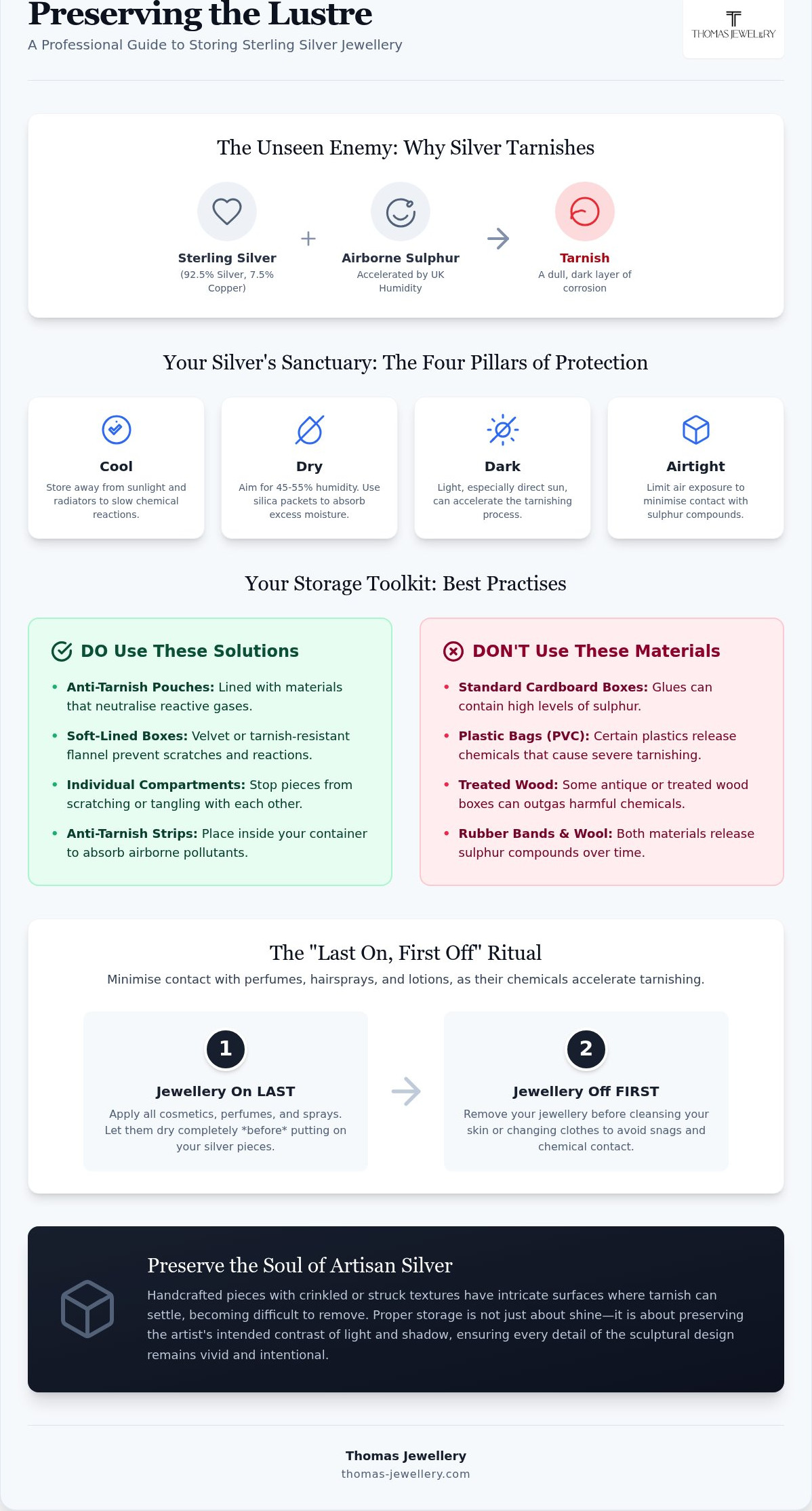
Most of our cherished pieces are crafted from sterling silver, a blend of 92.5% pure silver and 7.5% other metals, usually copper. This copper is essential for durability, allowing for the creation of delicate bands and sculptural forms, yet it's also more reactive than silver itself. This makes sterling silver particularly susceptible to the dulling effects of the air. In the UK, our homes present a specific challenge. The damp British climate acts as a catalyst, speeding up the reaction between the metal and the moisture in the air. Understanding these invisible interactions is the first step in finding the best way to store silver jewellery within the unique conditions of a British home.
Why Handcrafted Silver Needs Extra Attention
Handcrafted pieces, such as those in the Struck or Crinkled collections, feature complex surfaces that demand a more thoughtful approach to care. Tarnish has a tendency to settle into the tiny recesses and valleys of these artisan textures, where it can be difficult to reach without professional tools. If left unchecked, this oxidation can dull the sharp highlights and deep shadows that give sculptural jewellery its character. Prevention is always gentler than aggressive cleaning; maintaining the original lustre through proper habits is the best way to store silver jewellery to protect the artist's intent.
The Role of Environmental Factors
Our daily rituals often introduce the very elements that cause silver to turn. Perfumes, hairsprays, and even the oils from our skin can leave residues that invite tarnish. Beyond the dressing table, items like woollen scarves, rubber bands, or even certain types of treated wood in antique jewellery boxes can release sulphur gases. Tarnish is the result of silver reacting with hydrogen sulphide in the atmosphere. Identifying these culprits is essential when deciding on the best way to store silver jewellery to keep it ready for any occasion. Because central heating and seasonal dampness create fluctuating conditions, finding a stable, protected space is vital for long-term preservation.
Creating the Ideal Microclimate for Your Collection
To preserve the moon-like glow of sterling silver, one must think like a curator. The best way to store silver jewellery involves creating a stable sanctuary where the elements of the British atmosphere are held at bay. This is not merely about organisation; it is about engineering a microclimate. The golden rule is simple: keep your pieces cool, dark, and above all, dry. Heat and light are known to accelerate chemical reactions, whilst moisture acts as a bridge that allows airborne sulphur to reach the metal surface more easily.
Airtight environments are your first line of defence. When you limit the volume of air surrounding a piece, you limit its exposure to the pollutants that cause darkening. Whilst many people reach for the original gift box, standard cardboard is often held together by glues that contain high levels of sulphur. A much more effective choice is a specialised anti-tarnish pouch. These pouches are often impregnated with microscopic particles that neutralise reactive gases. To manage the humidity levels that plague British homes, repurpose the silica gel packets found in new handbags or shoe boxes. Tucking one of these into your storage case helps maintain the ideal humidity range of 45-55%, preventing the dampness from dulling your collection.
Choosing the Right Storage Container
Selecting a home for your jewellery requires a balance of aesthetics and protection. Traditional wooden boxes offer a sense of heritage, yet some treated woods can outgas chemicals that harm silver. Modern acrylic organisers provide a clear, airtight seal, but they must be paired with the right interior. Avoid storing silver in cheap plastic bags, especially those made of PVC, as they contain compounds that can turn silver black remarkably fast. Instead, ensure your container is lined with soft, non-abrasive materials like velvet or tarnish-resistant flannel. These fabrics provide a gentle cushion for the handcrafted textures of your rings and pendants, protecting them from both chemical and physical harm.
Active Tarnish Prevention Tools
For those who want to be proactive, anti-tarnish strips are a quiet revelation. These small pieces of treated paper work by "absorbing" reactive gases in the air before they ever reach your silver. For maximum efficacy, place one strip in each compartment and remember to change them every six months. If you prefer a more traditional, humble method, a simple piece of white chalk placed amongst your silver can act as a natural desiccant. It’s a small, thoughtful habit that ensures your favourite pieces remain as luminous as the day they were first struck.
Organising Your Silver to Prevent Physical Damage
Whilst chemical preservation is paramount, the physical vulnerability of sterling silver is often overlooked. It is a soulful, tactile metal. Because silver is relatively soft, it possesses a quiet fragility that requires a gentle hand. It is prone to fine surface scratches and subtle denting if left to jostle against other pieces in a crowded drawer. The best way to store silver jewellery is to view each piece as an individual entity that deserves its own dedicated, padded space. When items are jumbled together in a single bowl or tray, they inevitably knock against one another, dulling the polished surfaces and softening the crisp edges of handcrafted work.
Organising your collection by frequency of use is a simple, elegant habit. Keep your everyday staples accessible, but reserve a more secluded area for your statement pieces. This minimises unnecessary handling, which reduces the risk of accidental drops or micro-fractures in delicate chains and sculptural pendants. Tangling is not merely an inconvenience; it is a physical stressor that can permanently damage the integrity of fine silver links.
Strategic Separation of Pieces
Separate your collection with intention. Earrings should always be kept in pairs to avoid the frustration of searching, yet they must remain distanced from necklaces to prevent complex knots. There is also a hidden risk of metal transfer; storing silver directly amongst reactive metals like brass or copper can lead to unexpected discolouration. Large, bold items like contemporary sterling silver cocktail rings benefit from individual ring slots that keep their stones and settings secure and upright. By providing this structure, the best way to store silver jewellery becomes a ritual that honours the value of each investment.
Protecting Delicate Artisan Details
Artisan work requires a specific kind of gentleness to maintain its original form. For instance, the intricate wings of the Butterflies Collection are designed with a delicate lightness that can easily be bent if caught in a tangle. When storing pendants, lay them flat and ensure the chain is pulled away from the silver face to prevent it from leaving tiny, web-like marks on the metal. Similarly, artisan silver cufflinks should be housed in lined compartments to preserve the integrity of their struck or crinkled finishes, ensuring the texture remains exactly as the maker intended.
Maintenance Rituals Before and After Storage
Jewellery is an extension of our story. It lives with us through the day, absorbing the warmth of our skin and the traces of our environment. Because of this intimate connection, the best way to store silver jewellery begins long before you close the lid of your storage box. It starts with the simple "Last On, First Off" rule. By making your silver the final touch after your perfume has settled and the first thing you remove at the end of the evening, you shield it from the harsh chemicals found in cosmetics and hairsprays. These everyday substances are often the primary culprits behind rapid darkening.
Establishing a seasonal audit is another thoughtful habit for any collector. Every few months, take a moment to look closely at your pieces. Check for the earliest hints of a golden or brownish hue, especially in the crevices of textured designs. Catching oxidation early means it can be whisked away with a gentle buffing rather than requiring a deep chemical intervention. This proactive approach ensures your collection remains a source of joy rather than a maintenance burden.
The Pre-Storage Clean
Never return a piece to its sanctuary without a final moment of care. Even a few hours of wear leaves behind invisible skin oils and perspiration that can react with the metal whilst it sits in the dark. Use a soft, clean microfibre cloth to gently buff the surface, lifting away these residues. It is vital to ensure the silver is bone-dry before sealing it away. Any trapped moisture, even from a humid afternoon, becomes a catalyst for tarnish within an airtight container. For heavily worn items, a simple dip in warm, soapy water followed by a meticulous drying with a lint-free cloth provides a safe, non-chemical deep clean.
The Power of Regular Rotation
There is a beautiful irony in silver care: the more you wear it, the brighter it often remains. Leaving silver untouched for years in a drawer is the quickest route to deep, stubborn tarnish. When you wear your handcrafted silver jewellery UK, the friction against your skin and clothing acts as a natural, gentle polishing agent. The natural oils of your body can actually help to seal the metal against the atmosphere. Create a rotation system that ensures every piece gets "aired out" and enjoyed. This constant movement prevents the static conditions that allow oxidation to take hold. To keep your collection in peak condition, explore our range of handcrafted silver rings and necklaces designed for daily elegance.
Preserving the Soul of Artisan Silver Collections
A piece of artisan silver is a study in contrast. It is the interplay of polished highlights and shadowed recesses that gives a sculptural design its depth and life. When we talk about the best way to store silver jewellery, we are really discussing the preservation of the artist’s intent. In nature-inspired or contemporary geometric pieces, the "soul" of the work lives in those intentional textures. If tarnish is allowed to fill every valley of a design, the piece loses its three-dimensional story, becoming flat and monochromatic. Proper storage ensures that the dialogue between light and shadow remains as vivid as the day the piece left the workshop.
Independent artisan silver is a legacy item. It is crafted to be a companion for a lifetime, perhaps even for generations. This longevity requires a more thoughtful approach than mass-produced alternatives. By moving from the joyful experience of daily wear to the quiet discipline of evening preservation, you are honouring the craftsmanship of the object. The best way to store silver jewellery is to treat your storage box not as a hiding place, but as a private gallery where each item is respected and protected from the elements.
Caring for Textured and Hammered Finishes
Textured surfaces present a unique challenge that high-polish guides often overlook. For the Struck and Crinkled collections, maintaining the integrity of the finish is vital. Whilst a polishing cloth is wonderful for flat surfaces, it often cannot reach into the deep, hammered valleys of a textured ring. In these instances, a very soft-bristled brush can be used to gently whisk away dust before storage. Be wary of over-polishing; excessive friction with abrasive compounds can slowly wear down the crisp edges of "struck" marks over several decades. A gentle touch and consistent airtight storage are far more effective for long-term beauty.
The Thomas Jewellery Commitment to Longevity
At Thomas Jewellery, our handcrafted approach prioritises a thickness and quality of silver that is designed to withstand a lifetime of care. We believe that jewellery should be an accessible part of daily life, yet we also recognise that these pieces are investments in your personal style. By following these storage rituals, you ensure that your collection remains a luminous reflection of your journey. We invite you to explore more nature inspired silver jewellery to grow your personal gallery, knowing that with the right habits, each new addition will retain its soulful lustre for years to come.
A Lifetime of Luminous Silver
Caring for your collection is a quiet act of respect for the craftsmanship behind every piece. By mastering the microclimate of your storage and observing the "Last On, First Off" ritual, you protect the intricate textures and light-catching surfaces that make sterling silver so evocative. Adopting the best way to store silver jewellery ensures that your collection remains as striking as the day it was first struck. Keeping your treasures separate, dry, and airtight preserves the artist's intent for decades to come.
Our pieces are designed to be lived in and loved, featuring unique artisan textures and contemporary sculptural designs that are proudly handcrafted in the UK. When you invest in quality, you deserve a collection that stands the test of time and reflects your personal journey. Discover our contemporary handcrafted silver collections and find a new favourite to cherish. With these simple, thoughtful habits, your silver will continue to tell your story with the same soulful lustre it possessed at the very start.
Frequently Asked Questions
Can I store my silver jewellery in a wooden box?
You can use a wooden box, but you must ensure it isn't made from treated timber or held together by acidic glues. Many wooden containers release sulphur gases as they age, which can turn your silver black. If you choose wood, always use a specialised anti-tarnish lining or keep your pieces in individual pouches within the box. This provides a necessary barrier against potential chemical outgassing from the timber itself.
How often should I change anti-tarnish strips?
You should aim to change your anti-tarnish strips every six months to maintain their protective efficacy. These strips work by actively absorbing the reactive gases in the air before they can reach your jewellery. Over time, their absorbent capacity becomes saturated and they lose their ability to shield your collection. Marking your calendar for a twice-yearly refresh is a simple, thoughtful ritual that ensures your favourite pieces remain tarnish-free.
Is it safe to store silver in Ziploc bags?
Storing silver in airtight plastic bags is often cited as the best way to store silver jewellery for long-term preservation. However, you must only use bags made from polyethylene; avoid anything containing PVC, as these release harmful gases. Ensure you press out as much air as possible before sealing. This creates a low-oxygen environment that significantly slows down the oxidation process, making it an excellent, cost-effective solution for pieces you don't wear daily.
Why does my silver tarnish even when I don’t wear it?
Silver tarnishes because it is constantly interacting with the atmosphere, even when it sits untouched in a drawer. Hydrogen sulphide is present in most homes, originating from sources like central heating, cooking, or even certain household materials. This gas reacts with the silver to form silver sulphide, the dark layer we recognise as tarnish. Without an airtight seal, your jewellery is always at risk of this quiet chemical transformation regardless of how often it's worn.
Should I store silver jewellery with silica gel packets?
Yes, silica gel packets are a wonderful addition to any jewellery storage system as they help manage moisture levels. Humidity is a primary catalyst for oxidation, especially in the damp British climate. By placing a packet amongst your silver, you ensure the humidity remains within the ideal 45-55% range. This prevents the moisture from facilitating the chemical reaction between the metal and airborne sulphur, keeping your handcrafted pieces in pristine condition.
Can I store silver and gold jewellery together in the same compartment?
It is best to keep silver and gold jewellery in separate compartments to avoid physical damage. Gold is generally a harder metal than sterling silver, meaning it can easily leave fine scratches on the softer silver surface if the pieces knock together. Beyond the risk of scratching, separate organisation prevents the accidental transfer of tarnish. Providing each piece with its own sanctuary is an essential part of maintaining the integrity of your artisan collection.
Does humidity in the bathroom affect my silver jewellery storage?
Storing silver in the bathroom is strongly discouraged due to the high and frequent fluctuations in humidity. The steam from showers and baths creates a moist environment that rapidly accelerates the tarnishing process. This moisture acts as a bridge for atmospheric sulphur to settle on the metal surface. For the best way to store silver jewellery, choose a cool, dry room like a bedroom, far away from the dampness of the bathroom.
What is the best fabric for lining a silver jewellery box?
The best fabric for lining a jewellery box is either tarnish-resistant flannel or a high-quality, acid-free velvet. These materials provide a soft, non-abrasive cushion that protects the delicate details of artisan textures. Specialised anti-tarnish fabrics are often impregnated with silver or copper particles that neutralise sulphur gases before they reach your jewellery. Avoid using rough fabrics or cardboard linings, as these can trap moisture and chemicals that lead to premature darkening.