

A flawless mirror shine might seem like the ultimate sign of fine jewellery, yet it is often the quickest surface to surrender to everyday wear. If you have ever hesitated over whether a soft matte band marks faster than polished metal, or struggled to distinguish intentional patination from stubborn tarnish, you aren't alone. Understanding the different types of silver finishes reveals that surface texture is far more than a decorative afterthought; it defines how a piece lives with you every day.
The specific technique an artisan selects completely transforms the character of solid sterling silver, altering how it scatters light, softens scratches, and settles against your skin. You will discover how distinctive treatments affect longevity and tactile enjoyment, whilst learning how to clean textured designs without spoiling their organic depth. From hand-struck facets and crinkled folds to satin sheens and oxidised shadows, this guide will help you choose and care for a finish you love.
Key Takeaways
- Explore how different types of silver finishes alter light reflection, tactile depth, and everyday durability across solid sterling silver jewellery.
- Discover the practical differences between radiant mirror polish and soft satin textures, including how each surface responds to natural daily wear.
- Recognise the sculptural artistry behind struck, hammered, and crinkled finishes that celebrate genuine artisan craft over uniform mass production.
- Understand the vital distinction between accidental atmospheric tarnish and intentional oxidised patinas designed to highlight carved contrast.
- Learn gentle, finish-specific care techniques to clean textured and antiqued silver safely without dulling crisp relief or stripping away delicate depths.
What Are Silver Finishes and How Do They Transform Jewellery?
A raw piece of sterling silver fresh from the workbench holds quiet promise, but its true voice emerges only in the final stages of making. A silver finish refers to the precise mechanical abrasion or chemical treatment applied to the exterior plane of a completed design. Rather than serving as mere surface decoration, these methods dictate how an ornament lives against the skin, capturing shifting ambient light and engaging our instinct to touch.
Solid sterling silver, refined to the trusted .925 standard, provides an exceptional structural canvas for artisan manipulation. Its balanced alloy composition offers enough malleability to accept crisp hand carving or heavy hammer blows, whilst maintaining the resilience needed for everyday wear. By exploring the different types of silver finishes, you begin to see how a solitary precious metal can express everything from brilliant mirror radiance to velvety, moody shadow.
Defining Surface Treatments in Contemporary Silversmithing
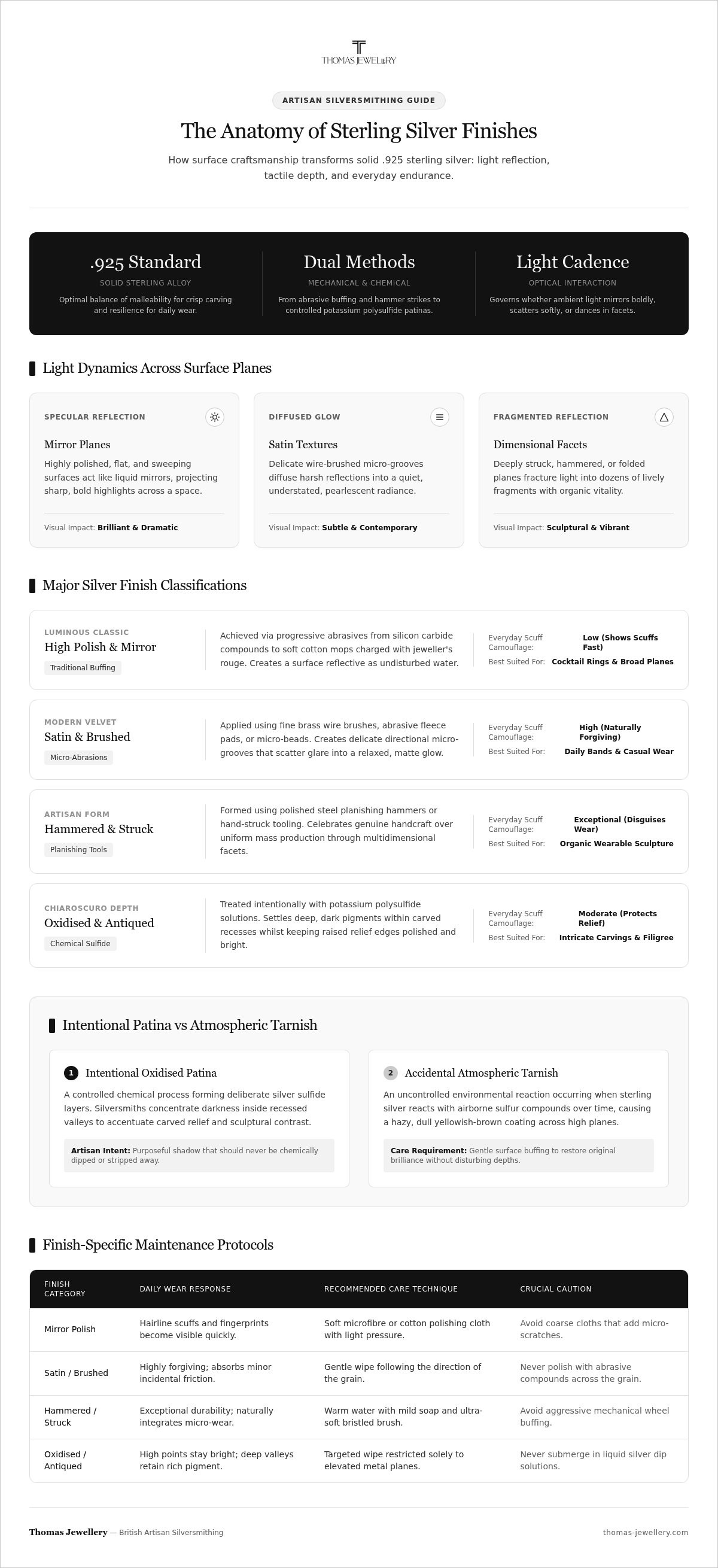
Finishing represents the critical closing dialogue between silversmith and metal. Mechanical techniques physically sculpt the surface plane, using fine emery papers, spinning brass bristles, or polished steel planishing hammers to alter the metal's topography. Alternatively, artisans deploy controlled chemical patination using potassium polysulfide solutions to form deliberate silver sulfide layers, settling rich contrasting pigments into deep carvings whilst leaving high points clean.
The Role of Light and Texture in Wearable Silver Art
Surface texture governs how jewellery interacts with its environment. Light behaves quite differently across varying topographies:
- Mirror planes: Highly polished broad surfaces act like liquid mirrors, throwing bold, brilliant highlights across a room.
- Satin textures: Delicate wire-brushed grains diffuse harsh reflections, creating a quiet, contemporary glow that feels understated and serene.
- Dimensional facets: Deeply struck or crinkled forms break light into dozens of dancing fragments, lending organic vitality to wearable sculpture.
Handcrafted jewellery relies on this sensory cadence. When an artisan deliberately contrasts shadows within tactile recesses against luminous raised edges, the metal ceases to feel like cold bullion. Instead, it transforms into an intimate, evolving companion shaped by human intention.
Smooth and Luminous Finishes: High Polish versus Satin and Brushed Silver
When weighing the different types of silver finishes for everyday pieces, smooth treatments present two wonderfully distinct visual worlds. Both rely on immaculate metal preparation, yet each channels daylight in an entirely different cadence. One dazzles with reflective precision, whilst the other wraps the wrist or finger in quiet, velvety light.
High Polish and Mirror Finishes: Classic Timeless Lustre
Achieving a true mirror polish demands patient progression through ever-finer abrasives, moving from silicon carbide compounds to soft cotton mops charged with jeweller's rouge. Rooted in traditional silverwork techniques, this meticulous buffing leaves silver as reflective as undisturbed water. The finish feels dramatic and celebratory. Broad planes, sweeping curves, and sculptural silhouettes like dramatic Cocktail Rings benefit immensely from this treatment, catching flashes of brightness with every gesture.
Satin, Matte, and Brushed Finishes: Modern Understated Warmth
Satin and brushed textures offer a softer, more intimate alternative to brilliant shine. By passing fine brass wire brushes, abrasive fleece pads, or micro-bead abrasives across the silver, an artisan creates delicate, directional micro-grooves. Rather than bouncing light back sharply, a satin finish scatters reflections into a serene, pearlescent glow. It feels modern and relaxed, pairing effortlessly with crisp linens, chunky knitwear, and quiet everyday routines.
Comparing Longevity and Daily Maintenance Between Smooth Finishes
The choice between mirror and brushed silver often comes down to how you live with your jewellery. Here is how they behave under the demands of daily wear:
- Mirror finish resilience: High-polish surfaces showcase sterling silver at its most luminous, but their pristine clarity highlights fine hairline scuffs and stray fingerprints quite rapidly.
- Satin finish endurance: Brushed and matte textures are exceptionally forgiving. Because the surface is already softened by linear micro-abrasions, incidental contact with door handles or desks blends naturally into the existing grain.
- Restoring original beauty: While high-shine pieces regain their liquid sheen with a dry microfibre wipe or professional rouge wheel, brushed textures maintain their quiet character for years with simple, warm-water cleansing.
Whether you adore the radiant bounce of high-gloss silver or prefer a softer matte touch, exploring UK-designed handcrafted sterling silver jewellery helps you find the exact surface that harmonises with your personal aesthetic.
Textured and Sculptural Finishes: Hammered, Struck, and Crinkled Artistry
Flat silver sheets possess a quiet reserve, yet deliberate artisan shaping coaxes extraordinary life from the metal. Amongst the different types of silver finishes, textured and sculptural treatments step away from uniform flatness, turning jewellery into three-dimensional wearable art. Each impression captures a human cadence, inviting mindful touch throughout the flow of ordinary days.
Hammered and Struck Silver: Facets of Captured Movement
Silversmiths use polished steel hammers over anvils to displace the metal's crystalline matrix, hardening the silver whilst forming planar facets. Rather than bouncing light in a single sheet, every impression acts as an angled mirror. This rhythmic interplay is captured distinctly in designs like the Struck Collection, where deliberate hammer strikes break daylight into an organic, liquid shimmer across the metal.
Crinkled and Reticulated Textures: Organic Inspiration from Nature
Texturing techniques often draw inspiration from the natural world, echoing the delicate crinkles of dried foliage or wave-rippled sands. By carefully heating the metal and compressing its surface, smiths create paper-like folds and sculptural ridges. Pieces such as Crinkled Cufflinks showcase this expressive aesthetic, proving how controlled organic distress adds unexpected sophistication and individuality to formal tailoring.
Why Textured Finishes Are Wonderfully Practical for Everyday Life
Beyond their visual poetry, sculpted surfaces are remarkably durable companions for modern routines:
- Camouflaging daily abrasions: Raised ridges and valleys deflect accidental knocks, ensuring minor scrapes blend effortlessly into the sculpted pattern.
- Graceful evolution: As textured jewellery brushes against fabric and skin, the highest facets polish naturally whilst deep recesses retain gentle shadows.
- Preserving handcrafted depth: Unlike mirror surfaces that invite aggressive buffing, textured silver thrives under gentle handling. As highlighted in the Canadian Conservation Institute's silver care guidelines, abrasive dips and harsh polishes strip away precious surface detail; warm water and mild soap are all these expressive finishes require.
Tactile finishes elevate silver from a passive adornment to an intimate, grounding presence you can feel beneath your fingertips all day long.
Depth and Drama: Oxidised, Patinated, and Antiqued Silver Finishes
Shadow gives form its true definition. While bright surfaces bounce ambient daylight back into the room, oxidised and antiqued treatments deliberately draw darkness into the metal. When studying the different types of silver finishes, understanding intentional patination reveals an entirely new artistic palette. In skilled artisan hands, controlled darkening behaves like chiaroscuro in painting, lending theatrical depth and sculptural intrigue to fine metalwork.
The Craft of Intentional Chemical Patination
Artisans achieve this moody transformation through dipping bare silver into potassium polysulfide solutions. Rather than coating the item with temporary dark enamel, this immersion triggers a genuine conversion layer of silver sulphide across the exterior. The depth of tone shifts with bath temperature and timing, producing shades from smoky slate to velvety midnight black. It gives fresh metal an immediate sense of history; modern forms suddenly carry an evocative, heirloom character.
Enhancing Relief and Shadow in Handcrafted Sculptures
Dark patination serves as an artisan spotlight for three-dimensional detailing. Once the piece is deeply blackened, the jeweller carefully polishes the raised contours back to bare sterling silver, leaving charcoal shadows resting in valleys and recessed recesses. Delicate motifs, such as the sculptural contours of the Butterflies Collection or the dimensional silhouette of a Halo Ring, gain arresting clarity through this interplay of shadow and polished light.
Understanding How Patinated Finishes Evolve with the Wearer
An oxidised finish is rarely static. It is a living surface. Friction against wool cuffs, silk shirts, and clean skin gradually polishes the most exposed ridges over time:
- Natural highlighting: The highest edges become brighter with regular wear, increasing contrast against protected low points.
- Organic protection: Recessed engravings and indentations retain their rich, velvety black pigment indefinitely.
- Personal character: This gentle shift in finish isn't damage or wear. It's the jewellery developing a bespoke patina unique to your routine.
For collectors seeking depth that stands out from uniform gloss, discovering the different types of silver finishes opens up entirely new avenues for personal expression. To find a tactile, expressive companion for your wardrobe, explore handcrafted silver designs at Thomas Jewellery and discover how wearable sculpture enriches your everyday rituals.
Choosing and Caring for Silver Finishes: Collector's Guide
Selecting from the different types of silver finishes isn't merely an aesthetic choice; it's about choosing a companion that fits your personal rhythm. A piece that aligns with your daily habits grows more meaningful with every wear. Preserving that delicate surface character, however, requires an intuitive approach to care, especially when tending to tactile or patinated forms.
Step 1: Match the Finish to Your Lifestyle and Style
Your daily routine offers the clearest guidance. High-polish surfaces make breathtaking statements for evening gatherings, yet they demand patience if you dislike visible micro-scuffs. For hands-on, active routines, textured surfaces like struck bands, crinkled cuffs, or satin rings are far more forgiving. Layering different types of silver finishes together creates effortless visual harmony, balancing clean luminous planes against the rich, tactile energy of struck facets.
Step 2: Clean Distinct Finishes with Purposeful Care
Different surfaces require dedicated preservation techniques, and generic cleaning advice can quickly prove disastrous to artisan finishes:
- Avoid chemical dips entirely: Acidic liquid cleaners strip metal indiscriminately. They instantly dissolve intentional dark patinas and spoil the velvety luminescence of satin textures.
- Rely on warm water and gentle soap: For struck, crinkled, and patinated silver, a gentle bath in lukewarm water with mild, fragrance-free soap and a soft-bristled brush lifts grime without flattening fine relief.
- Mindful polishing: Clean high-polish surfaces with a clean microfibre cloth to prevent hairline cleaning swirls. Avoid running abrasive polishing cloths across oxidised indentations; buff only the raised edges to preserve intentional artisan shadows.
Step 3: Store and Cherish Handcrafted Silver for Longevity
Sterling silver responds naturally to its environment. Storing individual pieces separately in anti-tarnish pouches protects them from ambient humidity and prevents pieces from scratching against one another. As a quiet rule of thumb, make jewellery the final accent of your dressing ritual, putting pieces on only after perfumes, moisturisers, and hair styling products have dried completely. Handcrafted treasures reward this gentle mindfulness, gathering an intimate glow as the years unfold. To begin curating your own collection of wearable sculpture, explore the enduring designs at Thomas Jewellery and find pieces crafted to bring beauty to everyday life.
Finding the Surface That Speaks to Your Journey
Every artisan finish tells a quiet story of human touch shaping precious metal. Exploring the different types of silver finishes reveals that texture is an intimate dialogue between form, light, and movement. Whether you gravitate towards the dramatic reflections of a mirror shine, the understated warmth of satin, or the captured rhythm of hand-hammered facets, your choice ultimately defines how a piece lives with you.
Solid .925 sterling silver is built for life, growing more distinctive with each passing season. To discover wearable art designed for enduring everyday elegance, explore handcrafted silver at Thomas Jewellery. Individually shaped in the UK using traditional techniques, our original struck, crinkled, and sculptural collections turn ordinary days into extraordinary celebrations of craft. Find the texture that resonates with your personal aesthetic, and wear it with confidence.
Frequently Asked Questions
What is the most durable silver finish for everyday rings and jewellery?
Textured and struck finishes are the most durable options for daily wear. Because their surface is already sculpted with planishing facets or organic ridges, everyday knocks and scratches blend invisibly into the design rather than showing as flaws. High mirror finishes reveal hairline scratches almost immediately. For an active routine, textured or deeply struck silver retains its artisan integrity longest without needing constant repolishing.
Does a satin or brushed silver finish scratch more easily than polished silver?
No, satin silver does not scratch more easily, though it interacts with daily contact differently. Both treatments share the exact same metal hardness, but brushed textures conceal superficial abrasions far better than high-gloss planes. Incidental scrapes simply merge into the existing directional grain. In contrast, polished surfaces act like reflective glass, displaying even microscopic friction lines under direct indoor lighting.
Will an oxidised black silver finish stay dark forever or rub away?
An oxidised finish is a living surface that evolves naturally over time. While the deep recesses and carved valleys retain their dark sulphide pigment permanently, everyday friction from skin and clothing gradually buffs the raised ridges back to bright silver. This organic transition isn't a defect; it enhances the three-dimensional depth of your piece, leaving a bespoke contrast unique to your daily movement.
Can you change the surface finish of a sterling silver jewellery piece later?
Yes, a skilled bench jeweller can alter most mechanical finishes later in an ornament's life. A mirror-polished band can be given a soft satin brush, or a matte pendant can be buffed back to a bright liquid gleam on a workshop mop. However, deeply struck, crinkled, or structural textures involve physical displacement of the metal and cannot simply be smoothed flat without removing significant material.
How do I clean textured or hammered silver without flattening its natural character?
Clean textured silver using lukewarm water, mild fragrance-free soap, and an ultra-soft toothbrush. Gently work the bristles into crevices to loosen dust and oils, then rinse thoroughly and pat dry with a soft cloth. Never use acidic chemical dip solutions on textured pieces, as harsh liquids quickly dissolve intentional patinas and strip away delicate surface relief.
Why does sterling silver react differently to various surface finishing methods?
Sterling silver reacts uniquely because of its 7.5% copper alloy content. This metallurgical balance gives the precious metal both malleability under the hammer and structural resilience against daily wear. Exploring the different types of silver finishes demonstrates this versatility perfectly; the alloy accepts crisp work-hardening from hand strikes, micro-abrasions from wire brushing, and controlled surface sulphide patination with equal grace.
Is rhodium plating considered a silver finish, and how does it compare?
Rhodium plating is an electroplated barrier coating rather than an artisan silver finish. While traditional techniques manipulate or patinate the solid silver itself, rhodium covers the exterior in an ultra-thin layer of platinum-group metal. It prevents atmospheric tarnish and creates a colder, mirror-white sheen, but it eventually wears away and lacks the warm, evolving tactile character found across handcrafted silver surfaces.